Choosing the right loading arm is crucial for operational efficiency and safety in various industries. Hydraulic and pneumatic loading arms offer distinct advantages and challenges. However, determining which option best suits your needs can be complex. How to choose hydraulic vs pneumatic loading arms? This question requires careful consideration of factors like product type, handling requirements, and the working environment.
According to a report by MarketsandMarkets, the global loading arm market is projected to grow significantly, driven by demand for safer and more efficient material transfer systems. The right choice impacts not only operational efficiency but also compliance with safety regulations. For instance, pneumatic systems deliver faster cycle times but may require more maintenance due to air pressure fluctuations. On the other hand, hydraulic systems provide more precise control but can be prone to leaks.
Evaluating these systems involves weighing the benefits against potential drawbacks. Factors such as initial costs, maintenance needs, and operational efficiency must be considered. Selecting between hydraulic and pneumatic options is not straightforward. It often requires a deeper understanding of specific operational needs and potential limitations. Making an informed choice can have lasting implications for workflow and safety.
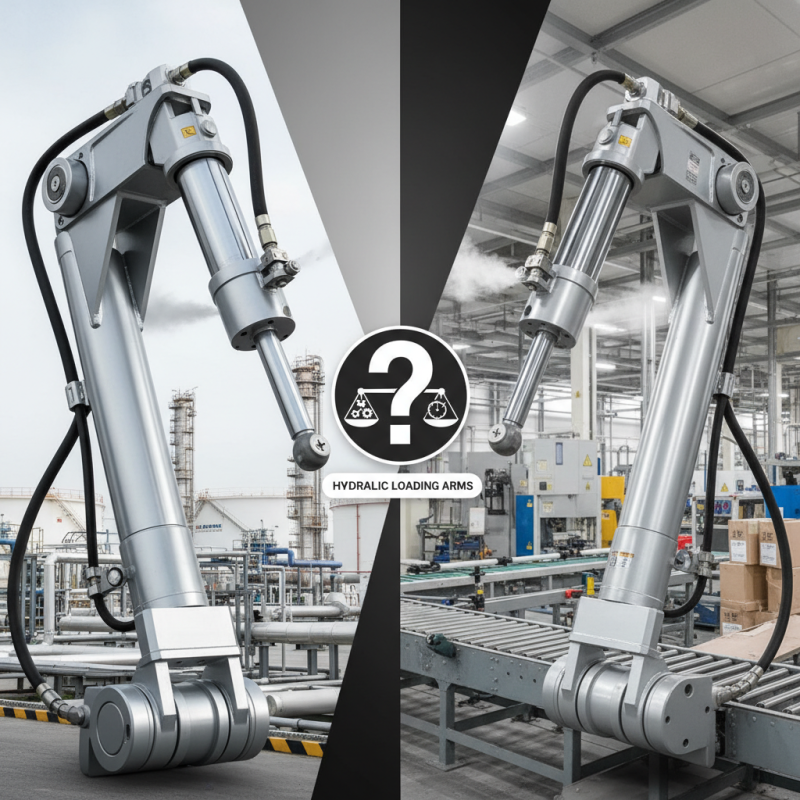
Understanding the Basics of Hydraulic and Pneumatic Loading Arms
When choosing between hydraulic and pneumatic loading arms, understanding their basic functions is crucial. Hydraulic systems operate using pressed liquids, while pneumatic systems use compressed air. Each has its application advantages that satisfy different industry needs. According to a recent report by the International Society of Automation, hydraulic systems are often preferred in applications requiring high force and precision. In contrast, pneumatic systems are more suitable for lighter loads and faster operations.
Tips: Consider the environment. Hydraulic systems can leak, posing safety risks. Pneumatic systems, being cleaner, might be safer in sensitive operations.
Analyzing operational costs is vital. Hydraulic systems usually have higher initial costs but lower long-term maintenance expenses. Pneumatic systems can be less expensive to install, yet they often require more maintenance due to wear on components.
In operations with fluctuating loads, pneumatic systems are versatile. They are adaptable and offer ease of use. Meanwhile, hydraulic systems shine in heavy-duty operations. Keep in mind that technology is always evolving, influencing efficiency factors. Regularly reassess which system suits your operations as industry standards change.
Comparison of Hydraulic and Pneumatic Loading Arms
Key Factors to Consider When Choosing Loading Arms
When choosing between hydraulic and pneumatic loading arms, several key factors come into play. First, assess the specific application. Hydraulic loading arms are often ideal for heavier loads. They can handle high pressures and provide precise control. Pneumatic systems work well for lighter operations and are typically more cost-effective. According to industry reports, pneumatic systems can reduce energy consumption by up to 30% compared to hydraulic ones.
Another important aspect is safety. Hydraulic systems can leak, leading to potential hazards. Conversely, pneumatic systems may present risks of air quality issues. Recent studies highlight that nearly 20% of workplace accidents in loading operations stem from improper equipment choice. Ensure that safety features align with operational needs.
Tips: Evaluate the environment where the loading arms will be used. For outdoor settings, consider weather-resistant designs. Regular maintenance is critical for both systems to avoid costly downtimes.
Lastly, analyze the installation and operational costs. While hydraulic arms might require more upfront investment, their longevity could justify the expense. Comparatively, pneumatic systems tend to have lower initial costs but may incur higher operation costs over time. Balancing these factors will help determine the most suitable option for your loading needs.
Comparative Analysis of Efficiency: Hydraulic vs. Pneumatic
When comparing hydraulic and pneumatic loading arms, efficiency is critical. Hydraulic systems often deliver higher pressure, enabling precise control in heavy-duty applications. A 2022 industry report states that hydraulic loading arms can handle pressures above 300 psi. This makes them ideal for liquids with high viscosity.
Pneumatic systems, on the other hand, excel in speed and lighter applications. They operate effectively at lower pressures, usually around 100 psi. A survey indicated that 65% of users preferred pneumatic loading arms for lighter substances.
However, they are more sensitive to temperature variations, which can affect their performance. This inconsistency could lead to operational challenges.
Decision factors should also include maintenance costs and energy consumption. Hydraulic systems may require more intensive upkeep. Yet, they achieve efficiency in bulk operations.
Pneumatic systems offer easier maintenance but often lack the robustness required for heavier tasks. Hence, each system presents unique trade-offs, warranting careful consideration for specific operational needs.
Cost Implications: Hydraulic and Pneumatic Loading Arms
When deciding between hydraulic and pneumatic loading arms, cost is a significant factor. Hydraulic systems often require higher initial investments due to their complex machinery. They may involve more expensive components, like pumps and valves. However, they can be more efficient over time. This efficiency often leads to lower operational costs. Maintenance might be more costly too, but they offer superior performance with heavy loads.
In contrast, pneumatic loading arms usually have a lower upfront cost. The simpler technology can be more appealing for facilities with budget constraints. However, their long-term efficiency may not be as strong as hydraulic systems. In less demanding environments, though, they can work perfectly well. It raises questions about future adaptability. Will a pneumatic arm meet rising operational needs later?
Both systems need careful consideration of the total cost of ownership. Beyond purchase price, think about maintenance and energy consumption. Each environment may favor one system over the other. Ultimately, the right choice depends on specific operational demands and budget constraints.
Maintenance Requirements and Longevity of Loading Arms
When considering the maintenance requirements and longevity of loading arms, it’s essential to assess the differences between hydraulic and pneumatic systems. Hydraulic loading arms usually involve oils and fluids, demanding regular checks for leaks. These components often require more intricate maintenance. Regular inspection of seals, hoses, and pumps is crucial to ensure reliable operation. Neglecting these tasks can lead to premature wear and costly downtime.
In contrast, pneumatic loading arms typically utilize compressed air. They may appear simpler, but they too require consistent attention. It's important to monitor air quality and pressure levels regularly. Air leaks can severely impact performance, leading to inefficiencies. Proper maintenance schedules for both systems play a vital role in their overall lifespan.
Investing time in routine maintenance pays dividends in the long run. Each loading arm type has its unique challenges. It’s not uncommon to overlook smaller issues until they become significant problems. Regular training for staff can help prevent such oversights. Ultimately, understanding the specific maintenance needs can enhance operational efficiency and prolong the life of loading arms.
How to Choose Between Hydraulic and Pneumatic Loading Arms? - Maintenance Requirements and Longevity of Loading Arms
| Loading Arm Type |
Maintenance Frequency |
Typical Longevity |
Key Maintenance Tasks |
Operating Conditions |
| Hydraulic Loading Arm |
Every 3-6 months |
15-20 years |
Fluid checks, seal replacements, system flush |
High pressure, stable temperature |
| Pneumatic Loading Arm |
Every 6-12 months |
10-15 years |
Air filter checks, lubricating components, hose inspections |
Variable pressure, varying temperatures |
FAQS
: Assess the specific application. Determine if you need hydraulic or pneumatic systems based on your load.
Hydraulic loading arms are ideal for heavier loads and high-pressure applications.
Hydraulic systems can leak, leading to potential hazards in the workplace.
Pneumatic systems excel in speed for lighter applications but operate at lower pressures.
Regular maintenance is crucial for both systems to minimize downtime and costs.
They have lower upfront costs but may incur higher operation costs over time.
Pneumatic systems can be sensitive to temperature variations, impacting their efficiency.
Consider if a pneumatic arm will meet rising operational demands in the future.
Pneumatic systems can reduce energy use by up to 30% compared to hydraulic systems.
Reflect on your current system's capabilities to ensure it can adapt to future needs.
Conclusion
When considering how to choose hydraulic vs pneumatic loading arms, it's essential to understand the fundamental differences between these two systems. Hydraulic loading arms generally offer higher efficiency for heavier loads and can be more suitable for larger operations, while pneumatic loading arms excel in lighter applications and typically allow for quicker movements and adjustments.
Key factors such as the specific application requirements, operational efficiency, cost implications, and maintenance needs play a critical role in the decision-making process. Additionally, an in-depth comparative analysis of both systems reveals that while hydraulic arms may have higher upfront costs and more complex maintenance, they often provide longer durability. In contrast, pneumatic systems, being simpler and often more cost-effective, may require more frequent maintenance. By carefully evaluating these aspects, operators can make informed choices that enhance productivity and reduce long-term costs.

 Liftora Arm