Chemical loading is a controlled process, but small mistakes can create serious consequences. A loose camlock, damaged gasket, or rushed valve opening may release liquid within seconds. China’s top chemical loading systems combine mechanical protection, monitoring, and disciplined operating procedures to reduce these risks.
How to prevent spillage in chemical loading operations? The answer begins with matching equipment to the chemical, temperature, pressure, and transfer rate. Loading arms should have suitable seals, emergency release couplings, grounding systems, and reliable shut-off valves. Overfill sensors can stop a transfer before the tank reaches its safe level. Vapor recovery also helps control pressure and reduce harmful emissions during loading.
Details matter. Operators should inspect hoses, flanges, gaskets, and drip trays before connecting equipment. The loading area must remain clean, dry, and free from unnecessary obstacles. A clear checklist can confirm valve positions, grounding continuity, tank capacity, and emergency-stop readiness. Slow starts are useful. They reveal leaks before flow becomes difficult to control.
Experience shows that technology alone cannot prevent every incident. Sensors may fail, and checklists may be skipped during busy shifts. This weakness deserves honest attention. Regular maintenance, operator training, documented inspections, and realistic emergency drills create stronger protection. Equipment suppliers should provide traceable specifications and practical guidance, not only attractive product claims. With careful design and consistent supervision, chemical loading systems can become safer, cleaner, and more dependable.
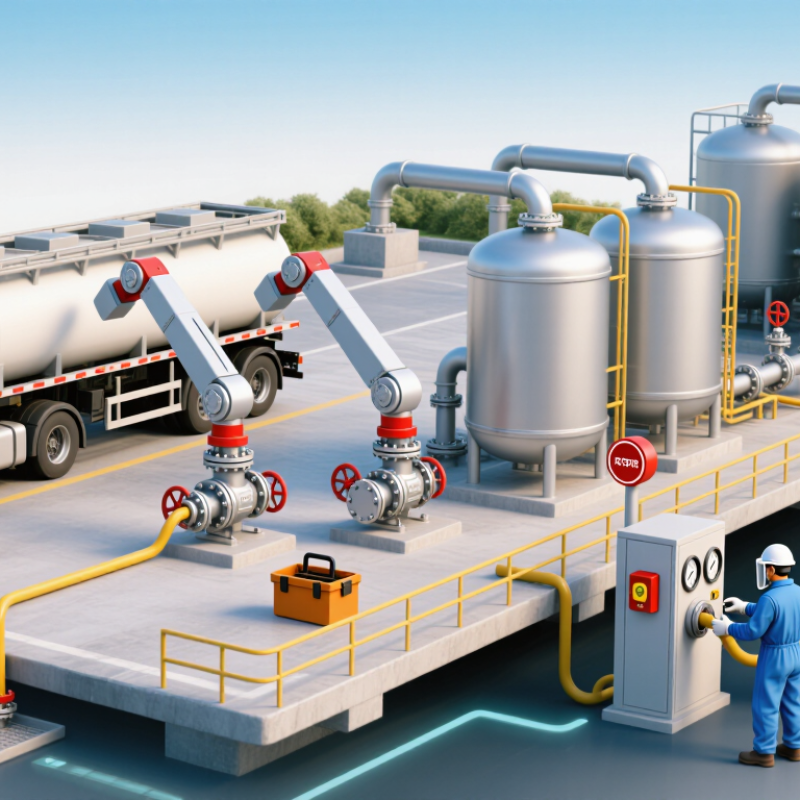
China Top Chemical Loading Systems: How to Prevent Spillage?
Chemical loading systems in China rely on coordinated components, not one isolated device. A loading arm or flexible hose directs liquid between storage tanks and transport equipment. Swivel joints support smooth movement around the connection point. Dry-disconnect couplings help reduce residual leakage during separation. Automatic valves stop product flow when sensors detect abnormal pressure or a disconnected line.
Grounding equipment controls static electricity before loading begins. Overfill sensors monitor tank capacity and trigger an emergency shutdown. Vapor-return lines manage displaced vapors and reduce pressure changes. Drip trays collect small releases near connection points. These details matter. In practice, operators should verify seals, hose condition, valve response, and grounding continuity before every transfer. Routine inspections should also record corrosion, stiff joints, and damaged emergency buttons.
Tips: Keep loading areas clean and brightly lit. Use clear operating steps beside the control panel. Test emergency shutoff functions regularly. Train workers with realistic spill scenarios, not only classroom instructions. A small weakness remains: even advanced equipment can fail when inspection records are incomplete. Supervisors should review repeated alarms and investigate unusual pressure changes. Good systems make errors visible early, while disciplined operation limits their consequences.
Chemical loading systems reduce spill risks by combining containment hardware, interlocks, emergency shutdown controls, and secondary protection. The chart groups the main safety functions used in a typical loading setup.
Reading the chart: The values represent the number of distinct safety functions included in each protection layer. Mechanical containment prevents releases at connection points, control and interlock systems stop unsafe loading conditions, and environmental protection limits the spread of vapors or liquid after a release.
Chemical loading safety begins before the pump starts. Inspect the tank shell, manway, vents, and grounding point. Look for dents, corrosion, residue, or an incorrect product label. Confirm the tank has enough free capacity for thermal expansion. A small volume mistake can become a serious spill.
Walk the transfer line physically. Check hose certificates, gaskets, camlocks, flanges, and pipe supports. Verify every valve position against the written loading plan. Keep drain valves closed and cap unused connections. Confirm emergency shutoff controls work. Test communication between the operator and the vehicle driver. It sounds basic. It is often skipped.
PHMSA’s 2023 hazardous-material incident data recorded more than 20,000 transportation incidents in the United States. Not every event began during loading, but transfer points remain practical risk controls. Industry guidance from the Center for Chemical Process Safety also favors verified operating conditions over memory-based checks. A checklist is not magic. Experienced teams can still rush when schedules tighten. One useful improvement is requiring a second person to match the product, destination, valve lineup, and tank capacity. Record exceptions honestly, even when the equipment appears usable. A cracked gasket or sticky valve may be the warning we almost ignored.
Before loading, review the safety data sheet and confirm chemical compatibility. Inspect the tank, hoses, couplings, valves, gaskets, and emergency shutoff. Replace worn parts immediately. Check that the receiving vessel has enough free capacity. Confirm the loading area has suitable ventilation, drainage control, spill equipment, and clear access. Keep the ground clean and dry.
Connect the transfer hose securely, then verify every valve position against the written procedure. Use grounding and bonding where required for the chemical and equipment. Start the pump at a low flow rate. Watch the connection points for drops, swelling, unusual movement, or pressure changes. Stop the transfer if anything looks abnormal. Do not rely on smell alone. Some chemicals provide little warning.
During loading, an operator should remain present and record the start time, volume, pressure, and inspection results. Avoid distracting tasks. After reaching the planned volume, stop the pump before closing valves. Drain or isolate the hose using the approved method, then cap both ends. Inspect the area again for residue. Clean small releases only with compatible materials and trained procedures.
A checklist helps, but it can still miss a loose clamp or a tired operator. That is why supervisors should review near misses and adjust procedures. Small drips matter. They often reveal a larger control weakness.
China Top Chemical Loading Systems How to Prevent Spillage?
Reliable chemical loading begins with early leak detection. Pressure sensors should monitor the transfer line continuously. A sudden pressure drop can indicate a loose connection, damaged hose, or open valve. Operators should also inspect seals, couplings, and loading arms before every transfer. Small leaks matter. Drip trays beneath connection points can catch minor releases before they reach the floor. In wet weather, drainage paths need extra attention because spilled liquid can spread quickly.
Emergency shutdowns must be simple and accessible. A clearly marked stop button should be located near the operator and another near the loading platform. When abnormal pressure, excessive flow, or a broken coupling is detected, the system should stop automatically. Shutoff valves should close in a controlled sequence to reduce pressure surges. Workers need regular drills, not only written instructions. A response that works on paper may fail beside a noisy pump.
Spill containment requires more than a raised platform. Bunded areas, compatible floor coatings, absorbent materials, and sealed drainage channels should work together. Containment capacity must reflect the largest credible release, with additional space for rainwater where applicable. Transfer hoses should be stored away from sunlight and sharp edges. One practical weakness is human attention. Operators can overlook a slow drip during busy shifts. Checklists, camera reviews, and documented inspections help expose that gap, although they cannot replace alert supervision.
| System Area | Primary Spill Hazard | Recommended Prevention Measure | Leak Detection and Alarm Criteria | Emergency Shutdown Action | Spill Containment Measure | Inspection and Verification |
|---|---|---|---|---|---|---|
| Loading Arm and Hose Connections | Seal failure, incorrect connection, hose rupture, or disconnection during transfer. |
|
|
Stop the transfer pump, close remotely operated isolation valves, and isolate both sides of the transfer line when safe to do so. | Provide curbed loading bays, chemical-resistant drainage, drain covers, and dedicated collection points sized according to the site risk assessment. | Inspect hoses, couplings, gaskets, and breakaway devices before each use; document periodic pressure and integrity testing according to the applicable procedure. |
| Tanker or Container Connection Point | Vehicle movement, coupling failure, open drain valve, or product release during connection and disconnection. |
|
Vehicle restraint interlock, connection-status confirmation, visible liquid detection, and operator monitoring during connection and disconnection. | Use an emergency stop station accessible from the loading position; prevent pump start unless the vehicle restraint and required valves are confirmed. | Use a sloped, impermeable loading surface leading to a contained sump or closed collection system rather than an uncontrolled stormwater drain. | Verify wheel restraints, interlocks, valve lineup, grounding, and emergency-stop accessibility before every loading operation. |
| Transfer Pump and Piping | Overpressure, dead-heading, mechanical seal leakage, blocked line, or piping corrosion. |
|
High discharge pressure, low suction pressure, low-flow trip, pump vibration, seal-leak sensor, or unexpected mass-balance deviation. | Trip the pump on defined high-pressure, low-flow, or seal-leak conditions; close isolation valves after confirming the action will not create a hazardous trapped pressure condition. | Use bunded equipment pads, closed drains, compatible absorbents, and collection tanks designed for the specific chemical. | Perform preventive maintenance, corrosion inspection, seal inspection, valve testing, and calibration of pressure and flow instruments. |
| Overfill Protection | Tank or receiving container overfill caused by incorrect capacity, failed level indication, or operator error. |
|
Independent high-high level switch, continuous level trend, high flow over time, or discrepancy between source and receiving inventories. | Automatically stop the transfer and close the inlet valve on a high-high level signal; provide a manually operated emergency stop as a separate protective layer. | Provide tank bunds or dikes with impermeable surfaces and no uncontrolled openings; keep rainwater management separate from chemical spill collection. | Test high-level alarms and shutdown interlocks at a defined frequency; record test results, bypasses, and corrective actions. |
| Vapor and Gas Detection | Release of toxic, flammable, or oxygen-displacing vapor during loading, sampling, or connection activities. |
|
Fixed or portable gas detector alarm at site-defined warning and high alarm levels based on the chemical hazard assessment and occupational exposure limits. | Stop transfer, isolate the source remotely where possible, activate area alarms, restrict access, and initiate the site emergency response plan. | Keep ignition sources controlled for flammable materials; use compatible vapor-control equipment and prevent contaminated runoff from entering public drainage. | Calibrate gas detectors, perform bump tests, verify ventilation, and maintain detector placement records. |
| Electrical Grounding and Bonding | Static discharge causing ignition during transfer of flammable liquids or combustible materials. | Bond and ground the vehicle, container, loading arm, and related conductive equipment before transfer; use an interlock where appropriate. | Ground-monitoring system indicates continuity status; loading enable signal remains unavailable if grounding is not verified. | Prevent pump start or stop the transfer if grounding continuity is lost. | Maintain a clear, dry, and unobstructed loading area; keep spill-control materials suitable for the chemical and ignition risk. | Inspect clamps, cables, connection points, and interlocks; verify continuity using the facility’s approved test method. |
| Emergency Shutdown System | Delayed response to a hose rupture, major leak, fire, toxic release, or abnormal operating condition. | Use clearly marked emergency-stop stations at the loading position and safe approach routes; design the shutdown logic from a documented hazard assessment. | Manual emergency-stop activation, leak detection, fire detection, high-high level, loss of grounding, or other approved trip conditions. | Stop pumps and compressors, close designated remotely operated valves, alarm the control room and local area, and place the system in a defined safe state. | Ensure shutdown does not divert chemical to an unsafe location; provide isolation, depressurization, and drainage arrangements suitable for the chemical. | Function-test the complete shutdown chain, including sensors, logic, valves, alarms, and reset procedures; control all bypasses under a formal permit process. |
| Spill Containment and Drainage | Spread of released chemical to soil, surface water, storm drains, or neighboring work areas. |
|
Visual inspection, sump level alarm, liquid sensor, drainage-flow alarm, or inspection of containment capacity before loading. | Stop the source if safe, isolate drainage, activate the emergency plan, and notify responsible personnel and authorities when legally required. | Use dedicated contained drainage and recovery equipment; do not wash chemical spills into stormwater or sanitary systems. | Inspect bunds, sumps, drain valves, covers, and spill kits; remove accumulated rainwater only under an approved inspection and disposal procedure. |
| Control System, Alarms, and Records | Missed alarm, incorrect set point, failed instrument, or unrecognized bypass. | Use documented alarm priorities, independent protection where necessary, controlled set-point changes, and clear operator procedures. | Alarm annunciation in the control room and locally; diagnostic alarms for sensor failure, communication loss, and shutdown-system bypass. | Place the process in a safe condition when critical instrumentation fails; prohibit continued transfer when required protective functions are unavailable. | Maintain current chemical inventories, safety data sheets, emergency contacts, site plans, and spill-response equipment lists. | Review alarm logs, incident reports, near misses, inspection records, and maintenance trends; conduct periodic drills and update procedures after changes. |
| Personnel and Emergency Response | Human error, delayed communication, unsuitable personal protective equipment, or unsafe spill response. |
|
Operator report, control-room alarm, CCTV observation, gas detector alarm, or automatic shutdown signal. | Raise the alarm, stop operations when safe, evacuate or shelter according to the emergency plan, and allow only trained responders to approach the release. | Use spill kits, compatible absorbents, non-sparking tools where applicable, and closed waste containers; manage recovered material as potentially hazardous waste until characterized. | Conduct documented refresher training, emergency exercises, PPE inspections, and post-incident reviews. |
| Applicable Engineering and Safety Frameworks | Inconsistent design, operation, or maintenance practices across loading facilities. | Base the design and operating procedures on a formal hazard assessment, chemical safety data, applicable Chinese regulations and standards, and recognized process-safety practices. | Use performance indicators such as alarm-test completion, shutdown-test completion, leak frequency, inspection completion, and corrective-action closure. | Define shutdown responsibilities, communication paths, and restart authorization in written procedures. | Specify containment capacity, material compatibility, drainage control, and waste handling in engineering and emergency documents. | Common reference points may include the chemical’s SDS, applicable GB standards, occupational exposure requirements, fire-safety requirements, environmental regulations, and recognized process-safety guidance. Confirm the current editions before use. |
| Safety note: Alarm limits, shutdown logic, containment capacity, detector locations, and PPE requirements must be established through a site-specific hazard assessment and verified against the chemical’s properties, operating conditions, applicable Chinese requirements, and the current safety data sheet. | ||||||
Chemical loading safety depends on disciplined maintenance, not equipment appearance. Before each transfer, operators should inspect hoses, gaskets, loading arms, grounding clamps, valves, and emergency shutoffs. A dry-break coupling can limit leakage, but only when seals remain compatible with the chemical and temperature.
Inspectors should record torque, pressure-test results, corrosion findings, and replacement dates. Automatic overfill protection needs functional testing, not just visual confirmation. Loading areas also require clear drainage, spill kits, visible isolation points, and unobstructed escape routes. Keep them practical.
The U.S. Bureau of Labor Statistics recorded 5,283 fatal work injuries in 2023. The figure covers all industries, not chemical loading specifically. Still, it reinforces the need to control line-of-fire exposure and rushed work. The UK Health and Safety Executive reported 138 worker fatalities in 2023/24, showing that routine tasks can remain dangerous.
Compliance also means matching procedures with current Safety Data Sheets, worker training, permit controls, and documented management of change. The Center for Chemical Process Safety identifies leading indicators, such as overdue inspections and bypassed alarms, as valuable warning signals. Field reviews often find a weakness: a completed checklist may hide poor understanding. Supervisors should interview operators, observe connections, and sample maintenance records. No system is perfect. A missed gasket inspection, even once, deserves investigation rather than quiet correction.
Loading arms or flexible hoses move liquids between tanks and transport equipment. Swivel joints support smooth movement. Dry-disconnect couplings reduce residual leakage.
Inspect seals, hoses, valves, grounding clamps, and couplings before every transfer. Confirm grounding continuity. Check for corrosion, stiffness, or visible damage.
Pressure sensors monitor the transfer line continuously. A sudden pressure drop may indicate a loose connection, damaged hose, or open valve.
Automatic valves should stop the flow. Emergency shutdown buttons must remain visible and reachable. One should be near the operator and another near the platform.
Overfill sensors monitor tank capacity and trigger shutdowns. Vapor-return lines manage displaced vapors and reduce pressure changes during transfer.
Drip trays should sit beneath connection points. Bunded floors, compatible coatings, absorbent materials, and sealed drainage channels provide additional control.
Records should include pressure tests, corrosion findings, torque checks, seal compatibility, and replacement dates. Review repeated alarms and overdue inspections.
Workers need realistic drills beside operating equipment, not classroom instruction alone. Practice stopping flow, isolating lines, and reaching escape routes.
No system is perfect. Incomplete records, rushed work, or a missed gasket inspection can still create trouble. That weakness deserves investigation.
Store hoses away from direct sunlight and sharp edges. Keep loading areas clean and brightly lit. Small details matter.
Chemical loading systems in China rely on coordinated components such as pumps, hoses, loading arms, valves, grounding devices, level indicators, and control panels to transfer chemicals safely. Before loading begins, operators should inspect tanks, pipelines, seals, valves, connections, and transfer equipment for damage, corrosion, blockage, or improper alignment. They should also confirm that the receiving tank has sufficient capacity, the chemical is compatible with the equipment, and all monitoring and communication systems are functioning correctly.
How to prevent spillage in chemical loading operations? Use a controlled, step-by-step process with secure connections, gradual flow activation, continuous level and pressure monitoring, and clear communication between personnel. Leak detection devices, emergency shutdown systems, overflow protection, and suitable containment areas can limit the impact of an unexpected release. Regular maintenance, equipment testing, operator training, inspection records, and adherence to applicable safety procedures further improve reliability. A proactive safety culture helps identify hazards early and keeps chemical loading operations stable, controlled, and environmentally responsible.

Liftora Arm