In the world of fuel transfer, precision is paramount. The introduction of metering skids has revolutionized this process. These skids offer advanced measurement capabilities, greatly enhancing how fuel is handled. But how does a metering skid improve fuel transfer accuracy? This question is central to understanding the benefits they provide.
Metering skids incorporate sophisticated technology. They use flow meters that minimize discrepancies in measurement. This leads to consistent and precise fuel transfers. Additionally, these systems often include features like temperature compensation. Such details ensure accuracy, regardless of environmental changes. Accurate readings reduce losses and improve operational efficiency, which is essential in today’s competitive markets.
Despite their advantages, challenges remain. Calibration and maintenance are crucial for optimal performance. Any errors in these areas can lead to reduced accuracy. Companies must invest in training and resources to support these technologies. Awareness of potential pitfalls is critical for maximizing the benefits. In conclusion, metering skids represent a significant advancement in fuel transfer accuracy, but vigilance in operations is always necessary.
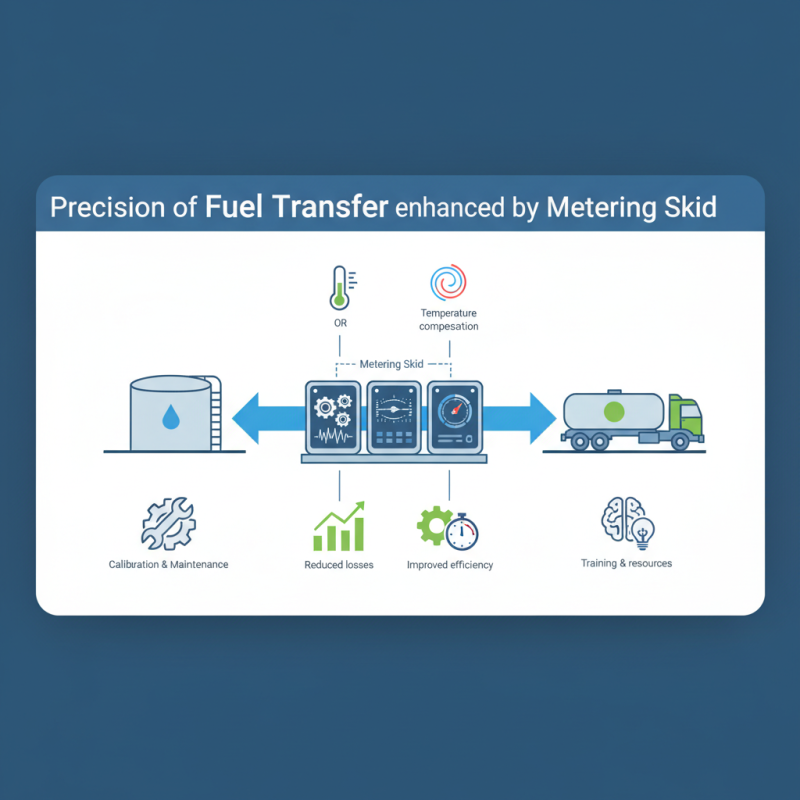
Metering skids play a crucial role in fuel transfer systems. They improve the accuracy of fuel measurement and reduce the risk of errors during transfer processes. These devices are engineered to handle various fuel types, ensuring compatibility and reliability across applications. The skids contain flow meters, valves, and pumps, which work in unison to facilitate precise measurements.
One of the key features of metering skids is their ability to provide real-time data on fuel flow rates. This data is vital for monitoring and optimizing fuel transfers. Operators can identify trends and make informed decisions. However, even with advanced technology, discrepancies can arise. Factors like temperature changes or equipment wear can affect measurements. It’s important for operators to regularly calibrate the system to ensure optimal performance.
Additionally, metering skids enhance safety during fuel transfer. They incorporate safety features that prevent leaks and spills, which can be costly and hazardous. Operators must be vigilant, ensuring all components are in working order. Despite the advantages, it’s essential to acknowledge that no system is infallible. Continuous training and awareness are key in mitigating potential issues during operation.
A metering skid plays a crucial role in fuel transfer systems, ensuring precise measurement and accountability. Key components of a metering skid include positively displaced pumps, flow meters, and control valves. These elements work together to enhance accuracy in fuel dispensing. Reports indicate that precision in fuel management can reduce wastage by up to 10%. In industries where fuel costs are significant, this can result in savings of thousands of dollars annually.
The flow meters used in metering skids are particularly vital. Coriolis and ultrasonic flow meters deliver high accuracy and reliability. According to the American Petroleum Institute, these meters can measure flow rates with an accuracy of ±0.1%. This level of precision is critical, especially in sectors where margin for error is minimal. However, not all meters perform equally. Factors such as temperature and pressure fluctuations can affect readings, demanding periodic calibration and maintenance to ensure accuracy.
Control valves are another essential component, regulating flow rates based on system requirements. Often, operators encounter challenges related to valve responsiveness. Slow or unresponsive valves can lead to discrepancies in fuel transfer. Regular system assessments are crucial for maintaining performance. Additionally, integrating a data logging feature on metering skids can provide further insights into performance trends. Tracking this data helps identify inefficiencies over time, prompting necessary adjustments.
| Component | Function | Importance | Typical Specifications |
|---|---|---|---|
| Flow Meter | Measures the flow rate of fuel | Ensures accurate fuel quantity measurement | Accuracy: ±0.1%, Max Flow Rate: 1000 L/min |
| Control Valve | Regulates fuel flow to maintain desired rates | Prevents over/under fueling | Size: 2 inches, Operating Pressure: Up to 150 psi |
| Strainer | Filters out contaminants in the fuel | Protects equipment and ensures fuel quality | Mesh Size: 100 μm, Max Flow: 1000 L/min |
| Flow Computer | Processes data from flow meter for accurate tracking | Facilitates real-time monitoring and control | Input: 4-20 mA, Output: Digital Communication |
| Calibration System | Ensures the accuracy of measurement devices | Maintains compliance with industry standards | Frequency: Annually, Tolerance: ±0.05% |
Metering skids play a critical role in fuel transfer processes. These systems are designed to enhance precision during the transfer. They use advanced flow measurement technologies to ensure accurate fuel delivery. Each component in a metering skid is calibrated for optimum performance. This meticulous attention to detail minimizes discrepancies in fuel volumes.
Accurate measurement is vital in industries relying on fuel transfer. Over or under-metering can lead to significant financial losses. Inaccuracies impact operational efficiency and trustworthiness in transactions. Metering skids address this by offering real-time data, which operators can use for immediate adjustments. The integration of various sensors and controls improves response time.
However, challenges remain. Environmental factors can affect measurement accuracy. Regular maintenance is essential to ensure consistent performance. Calibration needs frequent attention to maintain standards. Users must be diligent in applying best practices. Even minor lapses can lead to serious implications. Adjusting for these factors is an ongoing process that demands attention and expertise.
Quality control is vital in metering skid operations. A metering skid is designed for precision fuel transfer. It incorporates advanced flow meters, ensuring accuracy. Regular calibration helps maintain this precision. Calibration involves testing against known standards. This prevents discrepancies during fuel transfer. Inconsistent measurements can lead to financial losses and operational issues.
Routine checks are essential for reliability. Even small errors can magnify, affecting the entire process. Operators must be trained to recognize potential faults. Understanding the importance of calibrating flow meters enhances overall efficiency. It’s not just about technology; human oversight is crucial. Regular reviews of operational procedures are also important. This may highlight areas needing improvement.
Metering skids can be complex. Integrating technology requires expertise. Without proper calibration, accuracy is compromised. In some cases, equipment may malfunction due to environmental factors. Continuous monitoring can help identify these issues early. Teams should not overlook minor irregularities. Each detail matters in ensuring a seamless and efficient fuel transfer process.
Metering skids have become essential in optimizing fuel transfer operations. They ensure higher precision during fuel movement, significantly reducing waste. According to the American Petroleum Institute, precise fuel measurement can diminish inaccuracies by up to 99%. This is crucial for industries where every drop counts.
Using metering skids not only enhances efficiency but also saves costs. With a reduction in fuel loss, companies can reallocate those funds to other pressing needs. Data shows that more accurate transfers can lead to a 20-30% decrease in operational costs. Additionally, these skids can minimize environmental impact by preventing spills, adding a layer of responsibility to fuel management practices.
However, while metering skids offer numerous advantages, they also require regular maintenance to ensure continual accuracy. If not properly calibrated, they risk contributing to discrepancies. This highlights the need for ongoing training and investment in technology to maintain high standards. Industry experts recommend routine audits for reliability, fostering a culture of accountability in fuel management.
: Metering skids are devices used in fuel transfer systems to improve measurement accuracy.
They utilize advanced flow measurement technologies to provide precise fuel delivery during transfers.
They offer real-time data on fuel flow rates for monitoring and optimizing transfers.
Discrepancies can arise due to temperature changes or equipment wear affecting measurements.
Regular calibration ensures optimal performance and helps maintain measurement accuracy.
They can reduce fuel loss, which may lead to a 20-30% decrease in operational costs.
They have features to prevent leaks and spills during fuel transfer, enhancing safety.
If not maintained properly, they can contribute to measurement discrepancies.
Routine audits are recommended to ensure reliability and maintain high standards.
Continuous training is vital for operators to identify issues and handle equipment effectively.
A metering skid is a crucial component in fuel transfer systems, designed to enhance operational efficiency and measurement precision. By integrating essential components such as flow meters, valves, and control systems, metering skids enable accurate fuel measurement throughout the transfer process. How does a metering skid improve fuel transfer accuracy? It achieves this by utilizing advanced calibration techniques and real-time monitoring, ensuring that discrepancies in measurement are minimized and that the fuel delivered meets specified standards.
Moreover, quality control practices in metering skid operations contribute significantly to the reliability of fuel transactions. Regular calibration and maintenance are vital for sustaining accuracy and fostering trust in fuel transfer operations. Overall, the implementation of metering skids not only boosts precision in fuel measurement but also enhances overall transfer efficiency, ultimately leading to cost savings and improved operational integrity.

Liftora Arm