Modern loading systems shape how quickly goods move from a warehouse floor into a waiting truck. At a busy Chinese distribution center, every minute matters. A forklift queues at the dock. A worker checks the trailer position. A conveyor pauses while pallets are aligned. Small delays can build across a shift.
Why is automation important in modern loading systems? It helps coordinate dock levelers, vehicle restraints, conveyors, and sensors with greater consistency. Automated controls can reduce repetitive handling and help workers avoid awkward movements near moving equipment. They can also provide clearer operating signals when trucks arrive or loading conditions change. The result is not simply speed. It is a more predictable workflow, with fewer avoidable interruptions.
Technology entrepreneur Bill Gates once offered a useful caution: “The first rule of any technology used in a business is that automation applied to an efficient operation will magnify the efficiency. The second is that automation applied to an inefficient operation will magnify the inefficiency.” His point matters at the loading bay. Automation cannot fix unclear procedures by itself.
Good systems start with the actual site: dock layout, vehicle mix, product flow, and staff training. Then equipment can be selected and integrated around those needs. Still, no system is perfect. Sensors need maintenance, and unusual loads may require human judgment. The strongest loading solutions combine dependable technology with attentive people. That balance is central to evaluating China’s best loading systems and their practical value.
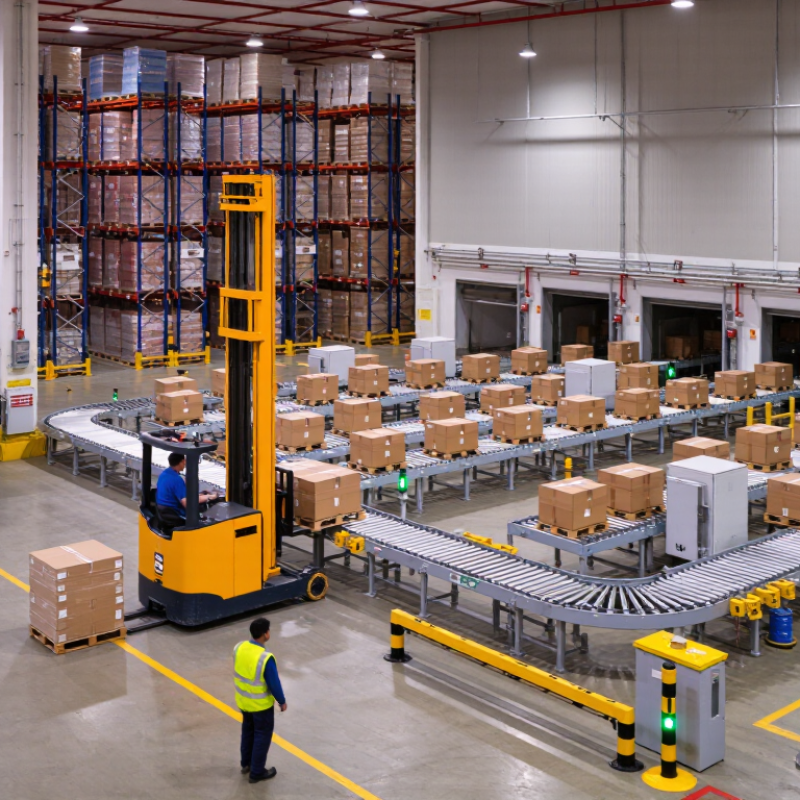
Loading systems at Chinese warehouses range from simple dock levelers to powered conveyors and automated vehicle-loading equipment. A leveler bridges the height gap between a truck bed and the dock. Dock shelters or seals reduce gaps around the vehicle, while vehicle restraints help prevent unintended movement. Small delays matter. The right combination depends on truck sizes, cargo, turnover, and the building’s layout—not just the amount of automation.
A typical dock station may include a steel platform, a hinged lip, hydraulic or mechanical controls, warning lights, and safety sensors. Conveyors move cartons between the dock and storage areas; forklifts remain common for pallets and irregular loads. Automation can coordinate these steps and reduce repeated manual handling, but sensors need clear sightlines and regular checks. Dust, rain, and temperature changes can affect equipment performance. The fit varies.
During dock operations, staff position and secure the vehicle, confirm the leveler is stable, then transfer goods while keeping the work area clear. Controls and lights should make each stage easy to verify. Even with automated equipment, workers need training and a practical way to stop operations if something looks wrong. More automation is not always better; a poorly matched system can add maintenance work without improving flow.
Automated loading connects warehouse operations with trucks through conveyors, dock equipment, and guided transfer systems. Cartons can travel from a packing line onto a telescopic belt that extends into a vehicle. Pallets may move by powered rollers or carefully positioned lift equipment. Sensors help detect gaps, misalignment, or a blocked path. At the dock, levelers bridge the height difference between the building floor and truck bed. This handoff matters. Poorly coordinated equipment can create queues, slow loading, and increase manual handling. Automation works best when equipment matches the goods, dock layout, and daily throughput.
Tips: Measure dock height and vehicle variation before selecting equipment. Keep sensors clean, and test emergency stops during routine inspections. Train operators to spot unstable loads.
Automation does not remove the need for people. Workers still check packaging, confirm load order, and respond when cartons arrive crooked. A real loading area can be dusty, noisy, and unpredictable. That complicates sensor performance. Allow space for maintenance and provide a clear manual operating process. Even a well-designed system may need adjustment after teams use it on busy shifts. The details are easy to underestimate.
| System or Equipment | How It Moves Goods | Typical Load Type | Automation Role | Operational Benefits | Key Planning Considerations |
|---|---|---|---|---|---|
| Telescopic belt conveyor | A powered conveyor extends into a trailer or shipping container, carrying items between the dock and the vehicle. | Cartons, parcels, and other packaged goods that can travel on a belt. | Variable-speed drives and controls can regulate belt movement; operators typically position and guide the conveyor. | Reduces the distance workers need to carry items and can support a steady flow of goods during loading or unloading. | Check trailer dimensions, dock layout, belt reach, package size, and safe access for workers. |
| Powered roller conveyor | Motor-driven rollers move compatible loads along a fixed or modular conveyor path. | Cartons, totes, and other packages with a sufficiently stable base. | Photoelectric sensors and zone controls can start, stop, or accumulate loads as they move through the system. | Links packing, sorting, staging, and dock areas while helping control the flow of packages. | Packages need a suitable base for rollers; the route, transfer points, and accumulation zones must be designed for the goods handled. |
| Flexible powered conveyor | Expandable conveyor sections are moved into position to connect a dock area with a vehicle opening. | Cartons and parcels moving between a dock and a trailer. | Powered sections move packages automatically, while staff generally position and adjust the flexible conveyor. | Can serve different dock positions and adapt to changing loading layouts without a permanently fixed conveyor route. | Allow room for movement, set safe operating procedures, and confirm that the conveyor can reach the required vehicle positions. |
| Automated guided vehicle (AGV) | A vehicle follows a defined guidance method to carry pallets or other loads between warehouse locations and a staging area. | Pallets and loads compatible with the vehicle’s forks, platform, or towing attachment. | Navigation, traffic controls, and task dispatch coordinate repeatable transport routes. | Automates repeated internal moves and can connect storage, staging, and dock operations. | Plan travel routes, pedestrian separation, floor conditions, charging, and how loads transfer between the vehicle and dock equipment. |
| Autonomous mobile robot (AMR) | A mobile robot transports a load through a work area and can navigate around mapped obstacles, depending on its configuration. | Totes, carts, or pallets when matched with an appropriate robot or load-handling attachment. | Onboard navigation and fleet software can assign transport tasks and coordinate multiple robots. | Can reduce repetitive point-to-point transport and adjust routes when warehouse traffic or layouts change. | Verify payload, route access, traffic rules, handoff points, and compatibility with warehouse and dock workflows. |
| Automatic truck loading system (ATLS) | Integrated equipment transfers prepared loads into or out of a vehicle using a system-specific loading interface. | Unit loads such as pallets or specially prepared load carriers, depending on the system design. | Controls coordinate the loading sequence and equipment movement; vehicle and load positioning must meet system requirements. | Can automate repeatable vehicle-loading operations and reduce some manual handling at the dock. | Requires close coordination of vehicle dimensions, trailer floor and interface, load pattern, dock design, and safety interlocks. |
| Dock leveler with dock shelter or seal | A leveler bridges the height gap between the dock and vehicle; a shelter or seal closes the space around the vehicle opening. | Supports material-handling equipment moving pallets, carts, or goods across the dock interface. | Hydraulic or mechanical controls operate the leveler; these components support loading but do not independently transport goods. | Provides a more usable transition between the warehouse floor and vehicle bed and can help limit exposure to outdoor conditions. | Match the leveler to vehicle heights and loads, and follow operating procedures for vehicle restraint and dock safety. |
At a busy loading dock, delays often begin with small tasks: repositioning a pallet, waiting for a forklift, or checking a load twice. Automated loading systems can coordinate conveyors, lifts, and vehicle positioning to reduce these pauses. Staff spend less time on repetitive handling and more time monitoring loads, solving exceptions, and keeping schedules realistic. The gains depend on suitable equipment and a workflow that actually fits the facility.
Tips: Map the dock’s busiest hours before choosing equipment. Keep walkways clear, train operators on safe stops, and inspect sensors and restraints regularly. Automation needs oversight. A blocked sensor or poorly placed pallet can still interrupt the line.
Consistent movement can raise throughput, but speed alone is not the goal. A steady loading rhythm helps teams process more freight without crowding the dock. Guarding, emergency stops, and clear separation between people and moving equipment can reduce exposure to common hazards. Still, automation is not a magic fix. Some facilities discover that their layout needs changes first, and that can be an awkward lesson. Measure loading times and near-misses before and after installation; use those records to spot problems that a machine cannot solve by itself.
IFR reported 276,288 industrial robot installations in China in 2023, showing automation’s growing role in production. The figure is striking. That does not mean every factory is fully automated. It points to investment in repeatable tasks, including machine loading and unloading. In a loading cell, a robot can pick up a metal blank, align it with a fixture, and remove a finished component. This steady motion can ease repetitive handling and help keep machines supplied during long shifts.
Yet robot counts alone do not tell us whether a loading system works well. Parts may arrive with small variations, fixtures can wear, and poorly timed handoffs can stop a cell. That matters.
Plant teams need to check cycle time, guarding, recovery procedures, maintenance access, and operator training before installation. Automation can improve consistency, but it still depends on sound process design and people who understand the equipment. A high national installation figure is useful context. It does not guarantee productivity at an individual factory.
A loading system should be judged by measured performance, not a headline cycle-time claim. Time a full sequence: vehicle positioning, dock alignment, loading, and release. Record both average and peak-period cycle times. A fast empty-bay test may not reflect mixed pallets, uneven trailer floors, or short staffing. Small details matter.
Capacity means more than maximum weight. Check pallet dimensions, load stability, trailer variation, and how the system handles an imperfectly centered load. Uptime needs a clear definition: planned operating hours minus downtime, with faults and recovery time recorded separately. MHI’s 2024 Annual Industry Report found that 55% of respondents planned to spend over $1 million on supply-chain innovation within two years. That signals investment interest, not proof that automation guarantees better results. Integration deserves the same scrutiny. Confirm that controls exchange usable status and fault data with warehouse systems, and test what happens when a sensor fails. A spreadsheet can look reassuring. The first week on a live dock may not.
Evaluating cycle time, load capacity, uptime, and integration
How to read this chart: Estimated effective loads per hour are calculated as 3,600 ÷ cycle time × uptime. Faster cycles and higher uptime increase potential throughput.
The figures below are transparent planning assumptions for comparison—not measured industry averages or vendor specifications. Actual results depend on the load, site conditions, safety requirements, and system design.
Scenario inputs: Manual — 90 sec/load, 500 kg rated load, 95% uptime, 10-day integration; Semi-automated — 45 sec/load, 1,000 kg, 97% uptime, 20-day integration; Automated — 20 sec/load, 1,500 kg, 98% uptime, 45-day integration. Confirm rated capacity, uptime targets, and integration scope for each specific application.
It bridges the height gap between a truck bed and the loading dock. A hinged lip helps create a usable path.
A station may include a steel platform, controls, warning lights, and safety sensors. Shelters or seals reduce gaps around vehicles.
They help prevent unintended vehicle movement during loading. Staff should confirm the vehicle is secure before transferring goods.
It can coordinate conveyors, lifts, and vehicle positioning. This may reduce waiting and repeated handling. The workflow must fit.
No. A steady loading rhythm matters more than speed alone. Crowded docks can create new problems.
A blocked sensor or poorly placed pallet can stop the line. Dust, rain, and temperature changes may affect equipment, too.
Confirm the leveler is stable, keep walkways clear, and check warning lights. Workers need training and a clear way to stop operations.
Compare loading times and near-misses before and after installation. Some sites may need layout changes first. That lesson can be awkward.
Review truck sizes, cargo types, busy hours, turnover, and building layout. More automation is not always better.
Loading systems in China include dock equipment, conveyors, lifts, and transfer devices that help move goods between warehouse areas and vehicles. Their performance depends on how well key components work together, how smoothly dock operations are organized, and whether equipment can handle the required load capacity and cycle time. Automated systems coordinate these movements with less manual handling, helping goods flow more consistently from storage to transport.
Why is automation important in modern loading systems? It can reduce repetitive labor, improve throughput, and support a safer workplace by limiting workers’ exposure to heavy or frequent manual tasks. China’s expanding use of industrial automation provides wider context: 276,288 industrial robots were installed in the country in 2023, according to IFR. When evaluating a loading system, businesses should consider cycle time, load capacity, uptime, and integration with existing warehouse and transport operations.

Liftora Arm