Explore our state-of-the-art loading, unloading, and precision structural fluid handling solutions engineered for rigorous industrial applications.
Liquefied Petroleum Gas (LPG) consists primarily of propane and butane. Because it is stored and transported under pressure to keep it in a liquid state, transferring it requires specialized machinery that can manage volatile vapor pressures, cavitation risks, and rigorous safety standards. Truck-mounted LPG transfer pumps play an indispensable role in terminal-to-terminal transport, bobtail delivery, and regional distribution networks.
An OEM/ODM factory specializing in truck-mounted LPG pumps must solve a delicate mechanical puzzle: designing a pump that is lightweight enough for vehicular mounting, yet powerful enough to achieve fast discharge rates without inducing vapor lock (cavitation). Shenzhen Liftora Arm Co., Ltd. addresses these challenges by manufacturing robust fluid transfer components, integrating them with structural loading arms, and developing turnkey skids designed for maximum terminal uptime.
“Modern LPG logistics demands high differential pressure capability, strict volatile emissions compliance, and components that can withstand constant vibration and road stress.”
Deciding on the correct hydraulic design impacts efficiency, volumetric delivery, and lifespan of truck-mounted logistics.
| Feature Parameter | Sliding Vane LPG Pumps (Industrial Standard) | Regenerative Turbine LPG Pumps | }
|---|---|---|
| Operating Concept | Positive displacement via sliding vanes pushing packets of liquid. | Kinetic energy transfer through high-velocity impeller vanes. |
| Cavitation Handling | Excellent. Cavitation suppression liners draw vapor back into the liquid stream. | Moderate. Prone to vapor locking if Net Positive Suction Head (NPSH) drops suddenly. |
| Flow Rate Stability | Constant flow rate regardless of pressure variations. Ideal for bulk metered delivery. | Flow drops off significantly as the backpressure rises. |
| Wear & Maintenance | Vanes self-adjust for wear over time. Vane replacement is simple and quick. | Impeller clearance is critical; wear leads to severe internal slippage. |
| Maximum Pressure | Typically operates up to 10-15 bar differential. | Capable of high differential pressures at reduced flow. |
OEM factories utilize sliding vane designs for the majority of truck-mounted bulk applications because they manage "vapor-bound" lines far better. As the liquid LPG leaves the tank trunk's sump, any heat input or pressure drop creates bubbles. Sliding vane pumps draw this multi-phase fluid smoothly, collapsing the vapor bubbles inside the pump chamber rather than losing prime.
China has established itself as the global epicenter for industrial fluid handling systems. Factories situated in advanced industrial clusters like Shenzhen offer unparalleled benefits.
1. Complete Supply Chain Integration: From heavy sand casting of ductile iron to advanced robotic machining, everything is clustered within short geographical distances. This drastically reduces transit times for raw components.
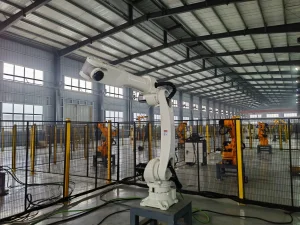
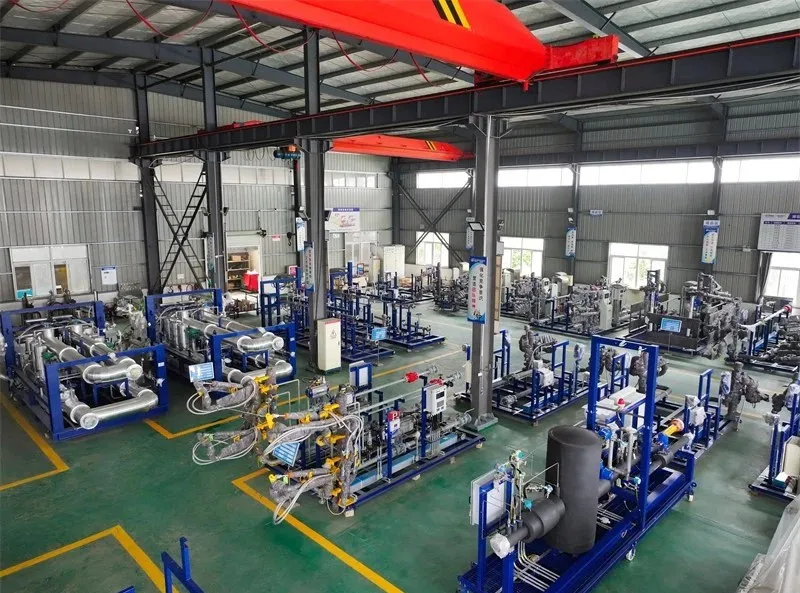
2. High-Precision CNC Machining: Modern Chinese factories, such as Shenzhen Liftora Arm Co., Ltd., deploy advanced CNC robotic arm technologies to machine pump housings and rotors down to sub-micron tolerances, ensuring leak-free mechanical seals.
3. Advanced Testing Facilities: Premium manufacturers do not simply assemble and ship. They operate state-of-the-art testing stations measuring hydrostatic performance, mechanical seal integrity under low temperatures, and vibrational analysis simulating road conditions.
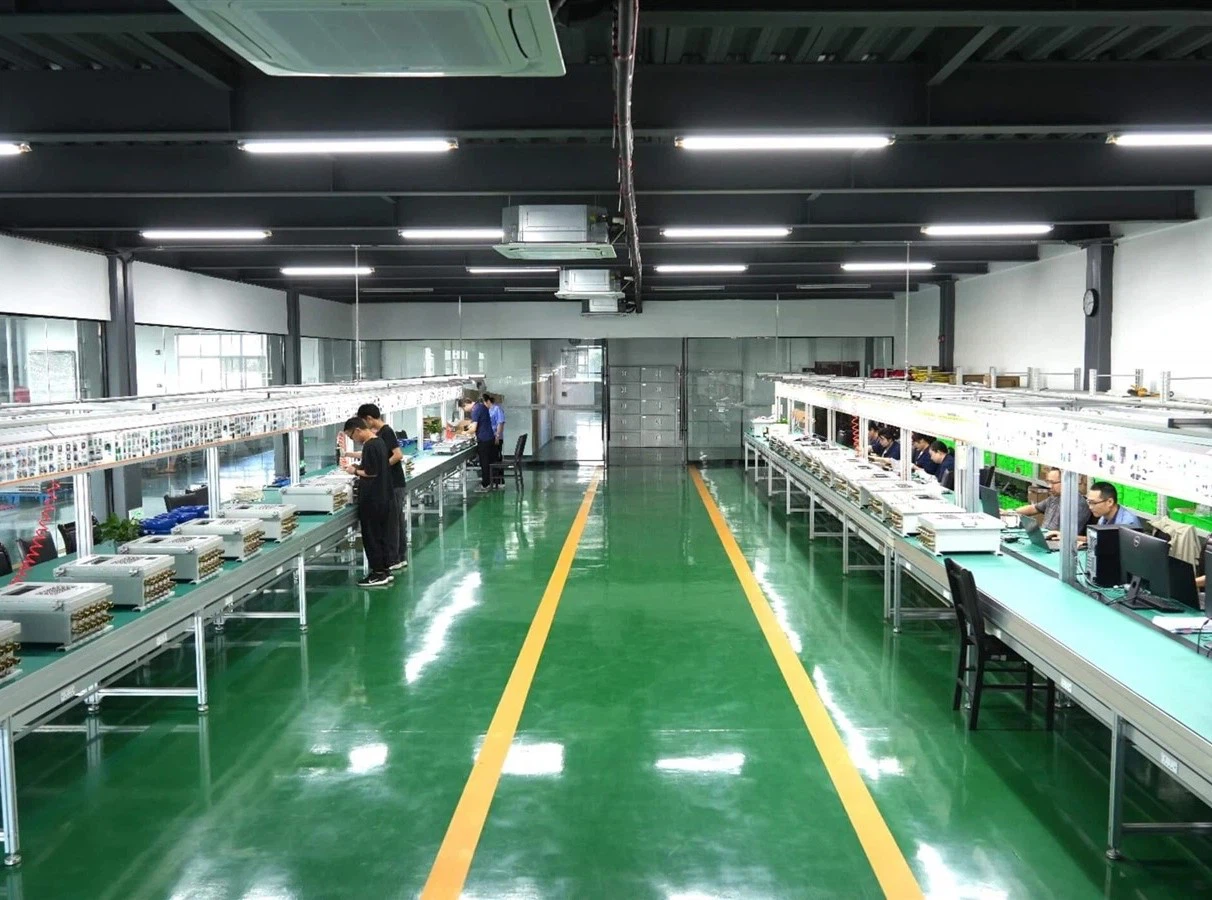
The global shift toward eco-friendly and safe energy logistics drives changes in how transfer systems are engineered.
How Shenzhen Liftora Arm partners with international clients to design bespoke fluid transfer systems from raw concepts.
Answers to critical questions regarding system integration, safety compliance, and hydraulic optimization.
Cavitation in LPG transfer occurs when local pressure falls below the fluid's vapor pressure, causing gas bubbles to form and then implode violently inside the pump. To prevent this, designers must lower the Net Positive Suction Head required (NPSHr) of the pump, increase the diameter of the suction line, eliminate restrictive elbows, and employ cavitation suppression liners that allow vapor pockets to escape back to the discharge port.
Grey cast iron is highly brittle and can fracture under thermal stress (dry run cooling) or hydraulic shock. Carbon steel is robust but is expensive to cast into complex hydraulic shapes. Ductile iron (specifically ASTM A536) offers excellent tensile strength, elongation properties, and fracture toughness, making it the most cost-effective and safe choice for handling pressurized flammable gases.
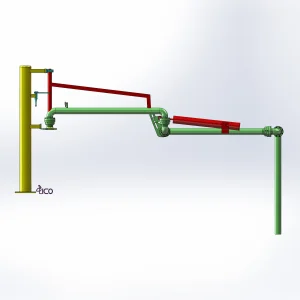
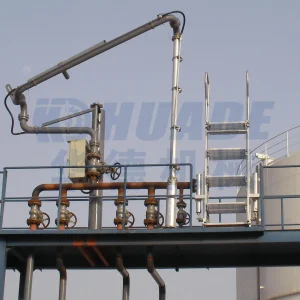
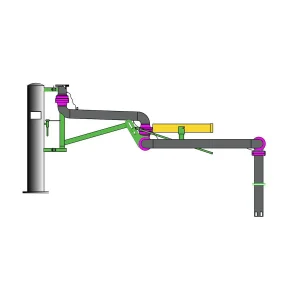
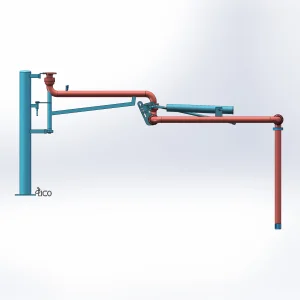
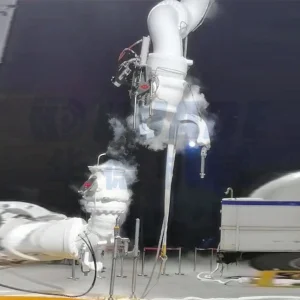
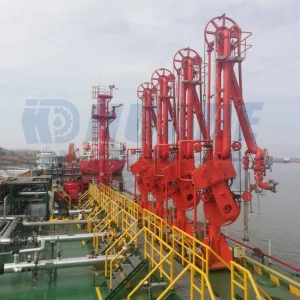
At terminals, a transfer pump must coordinate with a loading arm (such as the AL1502 series) and a metering skid system. Liquid LPG under pressure is pumped through the piping structure. The swivel joints in the loading arm allow free three-dimensional movement, while safety features (breakaway couplers and vapor return lines) ensure zero leakage. By optimizing both pump hydraulic performance and loading arm geometry, we maximize throughput while safeguarding operators.
International EPC contractors require hydrostatic pressure tests (normally 1.5 times the design pressure), mechanical seal leakage testing, dynamic balance verification of rotors, and thickness testing of protective coatings. Standard compliance certifications (e.g. ATEX for explosion-proof safety, CE for Europe, API standards for petroleum logistics) are mandatory to assure reliable operational safety.
Review our broader range of specialized energy distribution, loading, offshore monitoring, and automation machinery.
 Liftora Arm