Engineered to handle high-pressure chemical fluid control and corrosion-heavy operations in river and deepwater maritime zones.
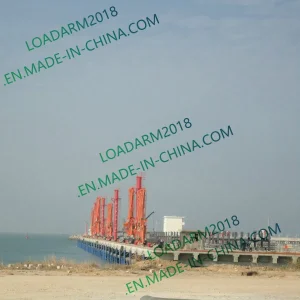
The Democratic Republic of the Congo (DR Congo) represents one of the most critical resource hubs in the sub-Saharan region, demanding specialized port infrastructure. With key maritime corridors located in the Bas-Congo region—anchored by the historical river ports of Matadi and Boma, alongside the groundbreaking development of the deepwater port of Banana—the import and export of chemicals and hydrocarbon fluid components require maximum mechanical safety.
A significant driver of this demand is the copper and cobalt mining belt in the southeastern region. Refining these minerals requires massive amounts of reagent chemicals, particularly sulfuric acid, liquid sulfur, and extraction solvents. Because much of this raw chemical flow is imported by sea and transported inland via rail and road corridors, the transfer points at the maritime terminals are highly critical. Ensuring zero-emission, zero-spill operation is both an environmental necessity and an operational safety requirement.
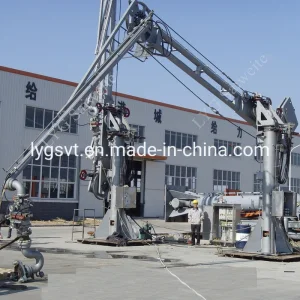
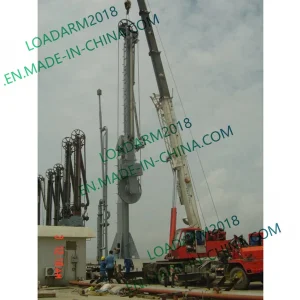
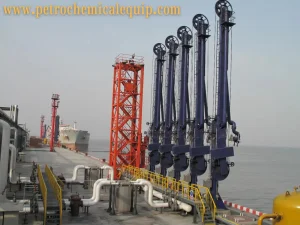
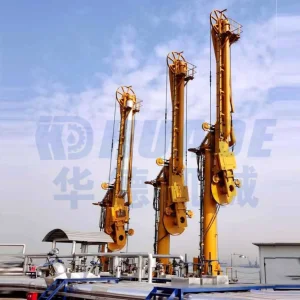
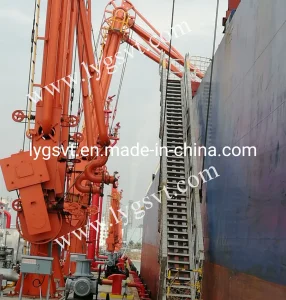
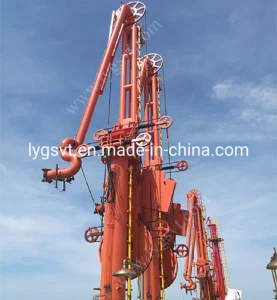
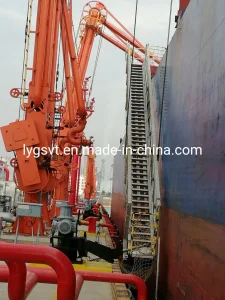
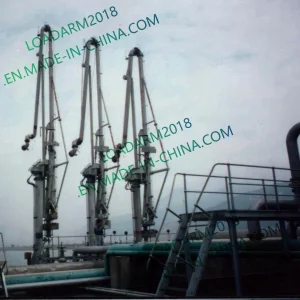
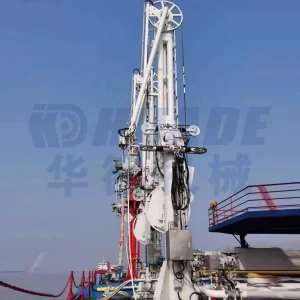
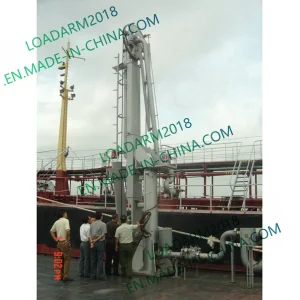
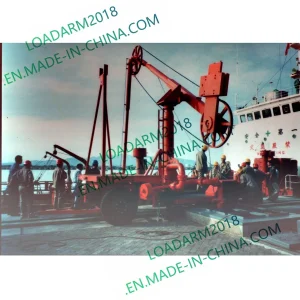
Due to the unique challenges of the Congo River current and draft variations, terminal operators require Marine Chemical Loading Arms equipped with highly responsive swivel joint technologies and double counterweight systems to compensate for constant vessel movement.
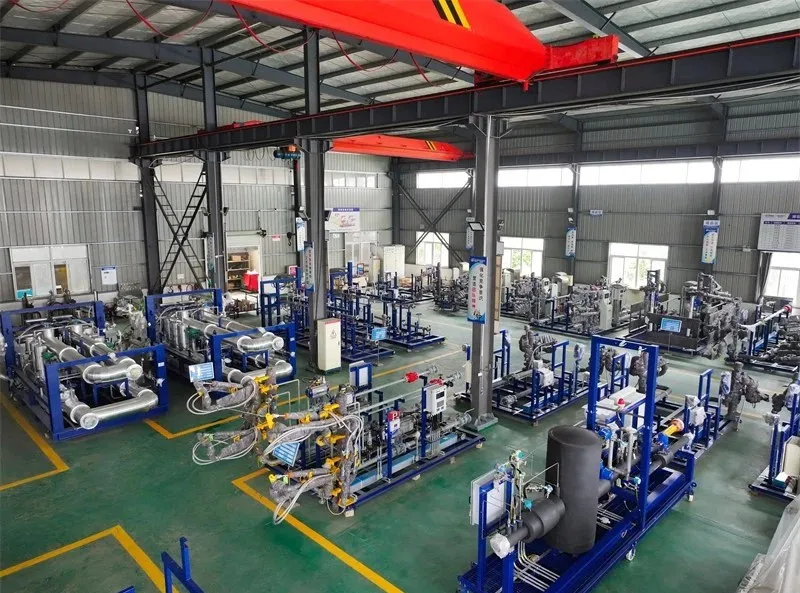
Addressing environmental regulations, high safety protocols, and mechanical precision for volatile compound shipping.
Modern terminals mandate closed-loop fluid systems. Liquid chemical loading arms are now co-engineered with auxiliary gas recovery lines to capture vapor compounds, avoiding release into the port atmosphere.
To avoid disaster in case of sudden vessel drift, automated Emergency Release Couplers (ERC) instantaneously disconnect the arm, sealing the pipeline on both sides to prevent chemical spills.
Instead of manual operation, remote PLC-controlled electro-hydraulic systems guide loading arm alignments precisely, minimizing the risk of seal damage caused by incorrect docking.
Custom Designed to Terminal Specs
ERC Disconnection Shut-off Time
High Corrosion Resistance Grade
Compliant Safety Standards
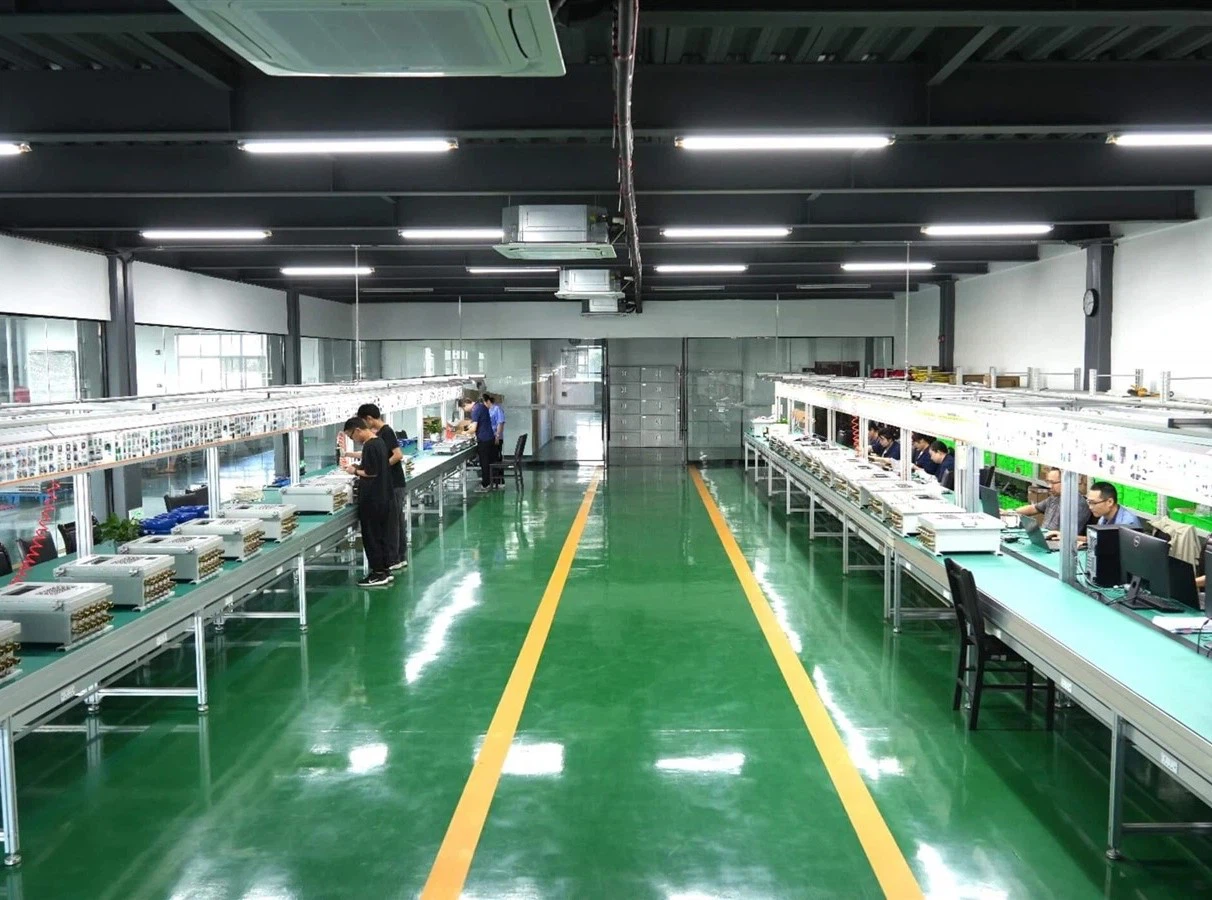
Shenzhen Liftora Arm Co., Ltd. is a professional manufacturer and engineering company specializing in the design, development, and production of advanced loading arm systems and fluid transfer solutions. Founded with a commitment to innovation, quality, and customer satisfaction, Liftora Arm has rapidly grown into a trusted partner for global energy, petrochemical, and industrial fluid handling projects. Our headquarters and manufacturing facilities in Shenzhen, China are equipped with modern production lines, precision fabrication tools, and rigorous testing equipment to ensure the consistent delivery of high‑performance products.
At Liftora Arm, we focus on the independent development and manufacturing of core components, enabling us to provide customers with robust marine loading arms, truck loading arms, and integrated metering skid systems tailored to diverse operating environments. Our comprehensive engineering service team collaborates closely with clients from initial concept through production and after‑sales support, ensuring cost‑effective solutions that meet stringent industry requirements. We adhere to international design and safety standards, and our products are engineered for durable performance, operational reliability, and ease of maintenance.
Committed to responsive service and global reach, Shenzhen Liftora Arm Co., Ltd. offers timely technical support, fast online responses, and reliable after‑sales services to clients worldwide. With a growing network of partners and distributors, Liftora Arm has earned the trust of engineering companies, terminal operators, and major industrial customers across Asia, Europe, Africa, and the Americas. Driven by continuous innovation and a customer‑centric approach, we strive to deliver fluid handling equipment that enhances efficiency, safety, and operational excellence in every application.
Developing fluid control machinery for complex logistical circumstances unique to the regional environment.
The swift flow of the Congo River demands loading arms with dynamic support systems that accommodate shifting vessel postures, avoiding mechanical fatigue in swivel joint assemblies.
Specifically configuration-adjusted loading lines lined with PTFE or manufactured with high-alloy materials (Hastelloy, SS316L) to resist highly aggressive reagents like Sulfuric Acid used in Katanga copper mining.
All structural parts are treated with high-grade marine paint layers compliant with C5-M high-salinity and high-humidity environments, assuring durability in hot and humid tropical zones.
Explore our complete portfolio designed for high chemical compatibility, pressure resistance, and automated operations.
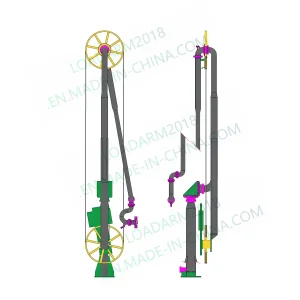
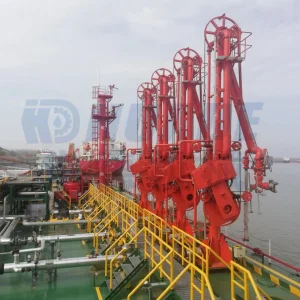
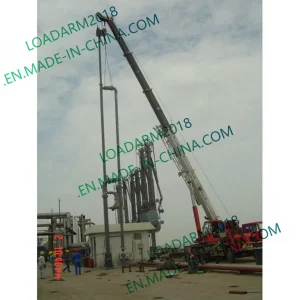
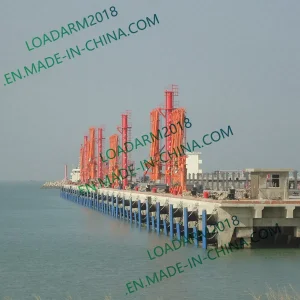
An authoritative analysis of mechanical integrity under environmental loads for petroleum terminal operations.
The primary pivot point of any Marine Chemical Loading Arm lies within its swivel joint arrangement. Liftora designs features a split-path double track configuration utilizing hardened ball bearings. For acidic transfer situations, standard alloys fail rapidly. We implement a corrosion-resistant barrier using high-density PTFE and compound fluoroplastic seals, designed to isolate the metallic structure from reactive chemical media.
Dynamic seal systems operate under spring-energized mechanisms that ensure constant compression, accommodating thermal expansions when switching between high-pressure transfer cycles and purge procedures. The mechanical load is evenly distributed to prevent structural stress points that induce micro-cracks over extended fatigue cycles.
The Emergency Release System (ERS) is integrated within the lower arm assembly. Consisting of a dual-valve assembly with an interspaced coupling mechanism, it activates automatically through hydraulic signal lines upon detecting drift values exceeding preset limit zones. The internal logic isolates the transfer pipeline prior to physical breakaway, containing residual chemical volumes within the arm and vessel manifolds. This technology is vital for the DR Congo river environments, where unpredictable currents can push docked vessels beyond normal operational limits.
Expert technical queries on procurement, transport parameters, compliance, and material science.
 Liftora Arm