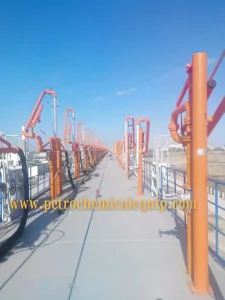
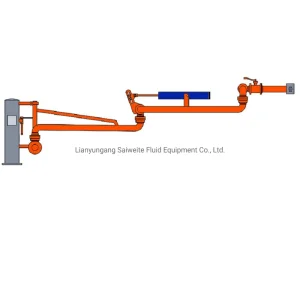
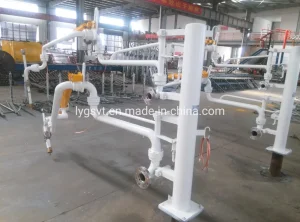
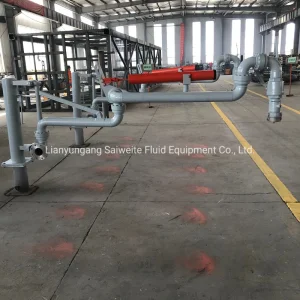
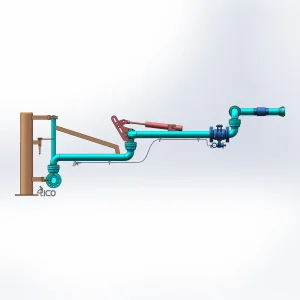
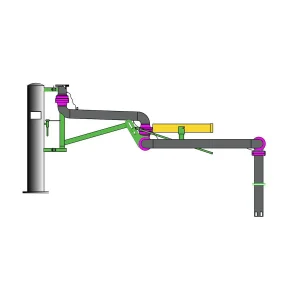
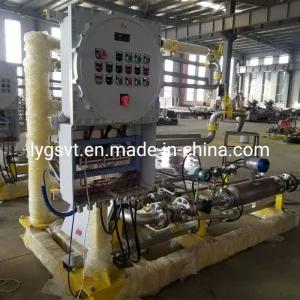
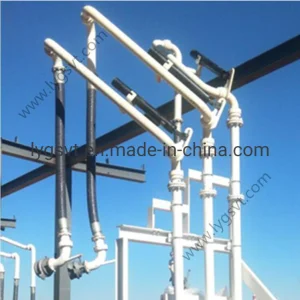
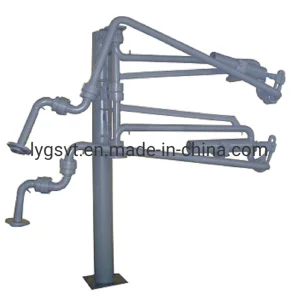
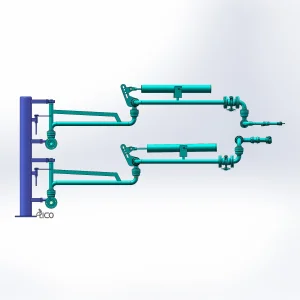
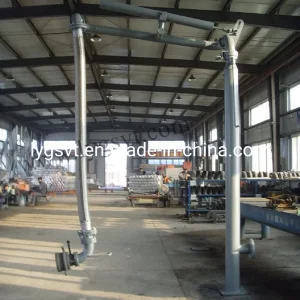
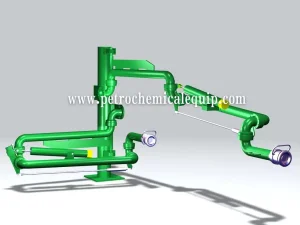
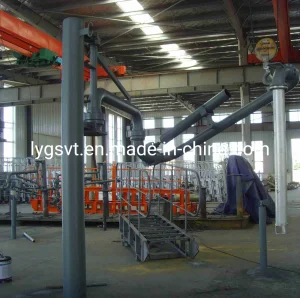
Our primary series of loading arms engineered specifically for chemical distribution grids, port terminals, and industrial transit networks across the Caribbean. Engineered to reduce emissions and ensure zero-spill operations.
As the Commonwealth of Dominica modernizes its key maritime gateways—notably the Roseau and Portsmouth ports—and transitions toward clean energy networks, the demand for high-integrity chemical transfer systems has risen significantly. Often referred to as the "Nature Isle of the Caribbean," Dominica operates under some of the region's most stringent environmental protocols. Industrial entities importing agricultural chemicals, petrochemical products, liquefied gases, and water treatment reagents must maintain near-zero tolerance for surface and marine chemical spills.
Historically, small island economies relied on manual fuel hoses and gravity-fed top-loading configurations. However, modern terminal safety frameworks require a major shift. Today, bottom loading systems and vapor-recovery enabled chemical loading arms are standard requirements. These systems prevent hazardous compound releases, protect workers, and safeguard Dominica's coastal ecology. Whether handling caustic soda for manufacturing, liquid chlorine for municipal treatment, or LPG for regional domestic energy, importing operators demand robust engineering that can withstand high humidity and coastal salinity.
Dominica's geographical features introduce distinct challenges: marine environment salinity, high humidity, seismic vulnerabilities, and intense tropical storms. Fluid handling equipment must be designed to withstand these variables.
Standard carbon steel loading lines corrode quickly under coastal conditions. Our structural designs utilize SS316L stainless steel and specialized PTFE linings to handle corrosive materials, including sulfuric acid, hydrochloric acid, and caustic soda. Furthermore, our swivel joints—the most critical point of failure in any loading system—are built with double-track raceways and custom multi-layer elastomeric seal configurations. This prevents product contamination and ensures the joints remain flexible over decades of operation.
To guard against seismic and high wind-load events, our loading arms feature structural columns calculated to withstand severe wind forces. In case of unexpected tanker movement during transfer, our integrated emergency release systems (ERS) and dry-break couplers instantly shut off flow, preventing environmental incidents.
Our proprietary swivel joint design features a primary product seal, a secondary leak detection seal, and an environmental dust seal, securing maximum safety during chemical transfer.
Rigid physical limits prevent the arm from moving outside its safe envelope, protecting piping systems and operators from stress fractures.
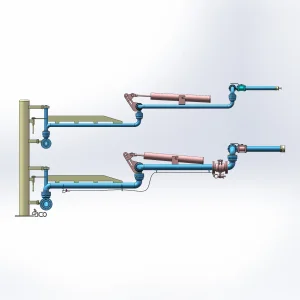
Explore our secondary line of high-performance transfer systems engineered for caustic materials, LPG distribution, and specialized LNG logistics in coastal hubs.
Every chemical loading arm exported to the Caribbean must meet international design standards to ensure high reliability. Below is our engineering matrix, detailing the materials and configuration limits designed for standard regional applications.
| Fluid Group | Common Mediums | Material Configuration | Seal Elastomer | Standard Accessories |
|---|---|---|---|---|
| Petrochemicals | Diesel, Gasoline, Solvents | Carbon Steel (ASTM A106 B / WCB) | Fluororubber (Viton / FKM) | API Coupler, Vapor Recovery Arm, Parking Sensor |
| Strong Acids | H₂SO₄, HCl, Phosphoric Acid | Carbon Steel PTFE Lined / SS316L | Virgin PTFE / FFKM | Pneumatic Actuator, Overfill Detection Probe |
| Alkalis & Bases | Sodium Hydroxide (Caustic), Ammonia | 316L Stainless Steel (CF3M) | EPDM / Teflon-jacketed | Vacuum Breaker, Emergency Release Coupler (ERC) |
| Liquefied Gases | LPG (Propane, Butane) | Low-temp Carbon Steel (A333 Gr.6) | PTFE Lip Seals with Spring Energizer | Breakaway Coupling, Purging/Drain Valves |
| Cryogenics | LNG, Liquid Nitrogen | Grade 316 Stainless Steel | Ultra-low Temp Spring Seal | Insulating Flange, Nitrogen Purging System |
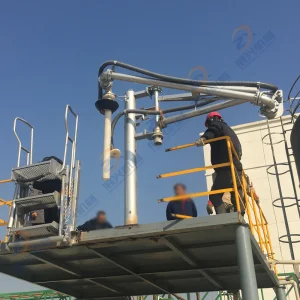
Top loading systems expose operators to vapor emissions and carry high fall-from-height risks. In contrast, bottom-loading setups locate the connection point near ground level. This layout yields three primary benefits:
Shenzhen Liftora Arm Co., Ltd. is a professional manufacturer and engineering company specializing in the design, development, and production of advanced loading arm systems and fluid transfer solutions. Founded with a commitment to innovation, quality, and customer satisfaction, Liftora Arm has rapidly grown into a trusted partner for global energy, petrochemical, and industrial fluid handling projects. Our headquarters and manufacturing facilities in Shenzhen, China are equipped with modern production lines, precision fabrication tools, and rigorous testing equipment to ensure the consistent delivery of high‑performance products.
At Liftora Arm, we focus on the independent development and manufacturing of core components, enabling us to provide customers with robust marine loading arms, truck loading arms, and integrated metering skid systems tailored to diverse operating environments. Our comprehensive engineering service team collaborates closely with clients from initial concept through production and after‑sales support, ensuring cost‑effective solutions that meet stringent industry requirements. We adhere to international design and safety standards, and our products are engineered for durable performance, operational reliability, and ease of maintenance.
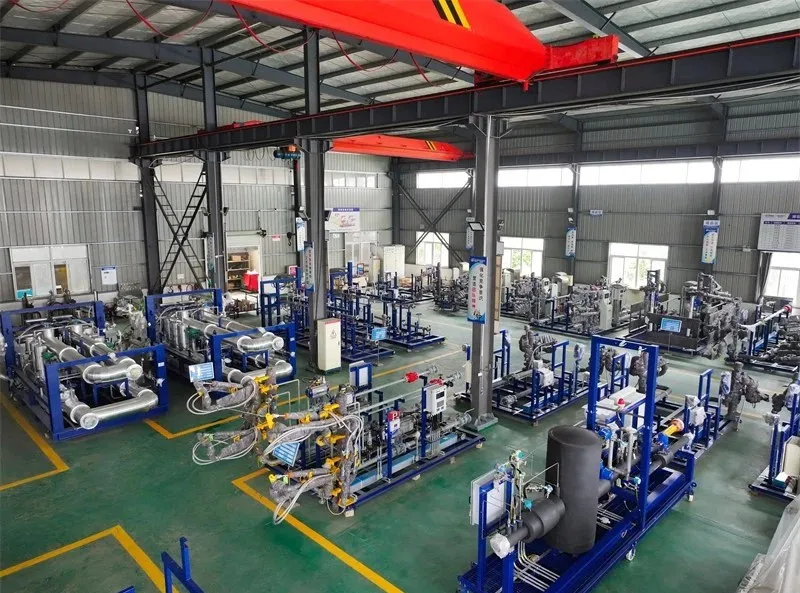
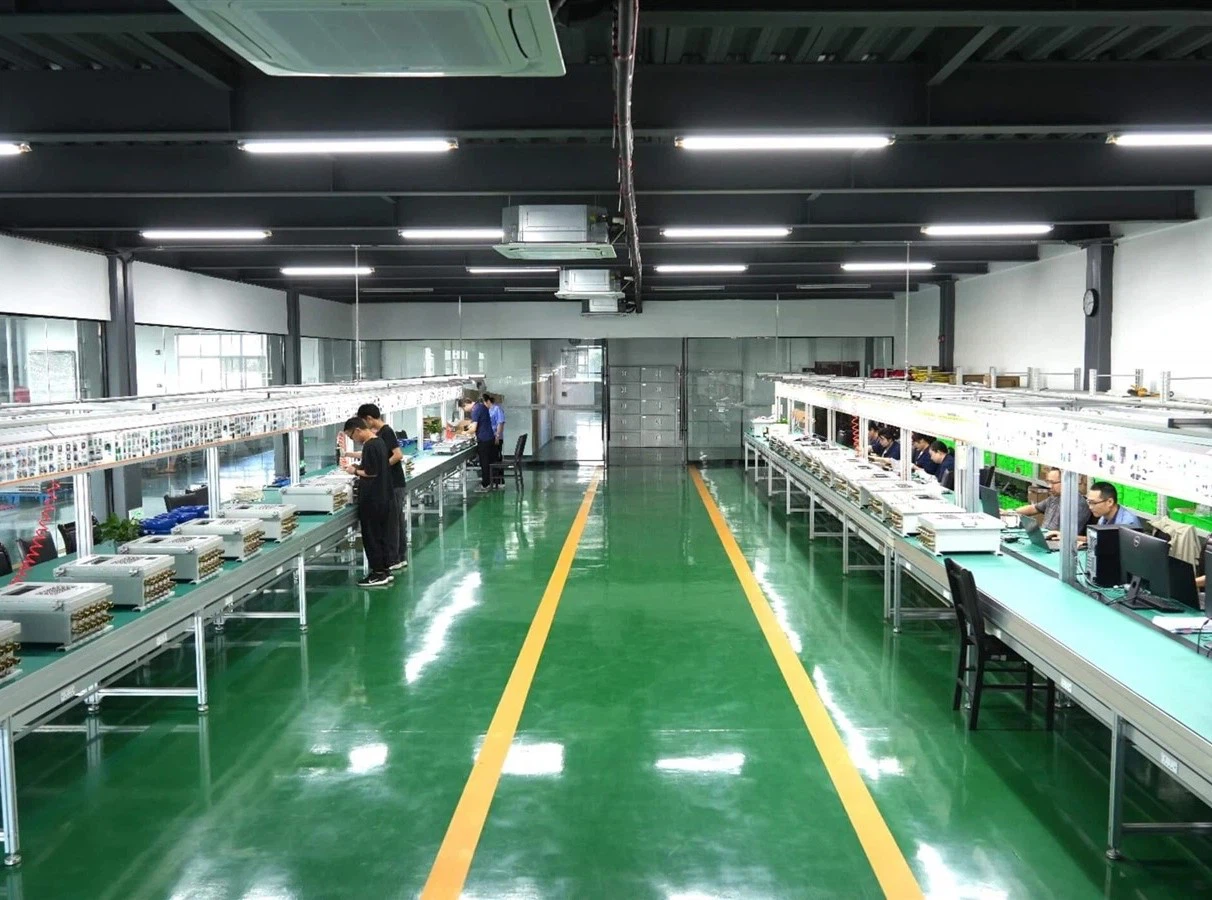
Committed to responsive service and global reach, Shenzhen Liftora Arm Co., Ltd. offers timely technical support, fast online responses, and reliable after‑sales services to clients worldwide. With a growing network of partners and distributors, Liftora Arm has earned the trust of engineering companies, terminal operators, and major industrial customers across Asia, Europe, Africa, and the Americas. Driven by continuous innovation and a customer‑centric approach, we strive to deliver fluid handling equipment that enhances efficiency, safety, and operational excellence in every application.
By cutting out intermediate brokers, Dominica terminal operators get factory pricing, customized engineering, and dedicated support directly from Liftora's design office.
Procuring loading systems for the Dominica market requires evaluating technical suitability alongside shipping, compliance, and long-term maintenance costs. Below is our recommended framework for EPC contractors and operations managers:
Ensure the equipment meets ASME B31.3 standards for process piping, API RP 1004 for bottom-loading compatibility, and ATEX/IECEx certifications for flame-proof electrical fittings in hazardous locations.
Tropical wind loading calculations should conform to local building regulations (e.g., CUBiC / CARICOM structural codes) to ensure systems withstand severe hurricanes without mechanical failure.
Select swivel joints that allow seal replacement on-site without dismantling the entire arm. This reduces downtime and limits maintenance dependencies on external service personnel.
Shenzhen Liftora Arm Co., Ltd. provides complete digital quality records, welding documentation (WPS, PQR), hydrostatic test reports, and non-destructive testing reports (NDT/RT/PT) to ensure straightforward customs clearance and safety inspections.
Industrial infrastructure is moving toward automation. At Liftora, we are integrating digital monitoring into traditional mechanical systems.
Wireless rotation tracking sensors monitor the movements of the loading arm, prompting scheduled maintenance before joints reach fatigue limits.
Dual-containment swivel chambers equipped with pressure-drop sensors trigger emergency system shutdowns at the first sign of seal wear.
Pneumatically assisted lift units reduce manual physical effort, making connection processes faster and safer for operators.
Authoritative answers on compliance, customization, and engineering standards for the Dominica market.
Industrial installations in Dominica generally follow ASME standards (ASME B31.3 for process piping, ASME Section IX for welding) along with API RP 1004 protocols for petroleum terminal interfaces. For gas delivery configurations, international codes like SIGTTO and OCIMF are also applied.
We use SS316L stainless steel for wetted components, along with fluorinated linings (PTFE, PFA) for highly corrosive acids. Non-wetted structural pieces receive sandblasting (Sa 2.5) followed by a marine-grade polyurethane coating system (C5-M specification) to protect against saline environments.
Dry-break (or dry-disconnect) couplers allow connection and disconnection without spilling chemicals. They include an internal valve mechanism that stays closed until the coupling is secured, reducing local exposure hazards for terminal workers.
Yes. Our engineering division works with detailed site drawings or 3D laser-scan files to customize horizontal reach, vertical clearance, and mounting flange configurations, ensuring seamless alignment with existing piping.
We provide a comprehensive quality documentation package, which includes material test certificates (EN 10204 3.1), weld inspection records, hydro-testing reports, painting thickness logs, and operations manuals.
Our extended range of certified loading and unloading arms for oil, gas, chemical, and petrochemical fluid handling facilities in Dominica.
 Liftora Arm