Truck LPG Loading Arm Factories & Exporters in Togo

Advanced Fluid Transfer Solutions Engineered for Safety, Performance, and West African Downstream Gas Infrastructure

Featured LPG Loading Arms for Togolese Terminals

Engineered specifically to withstand high coastal humidity and tropical operating environments
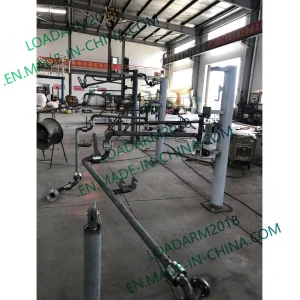
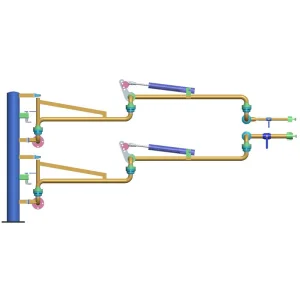
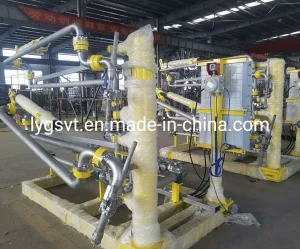
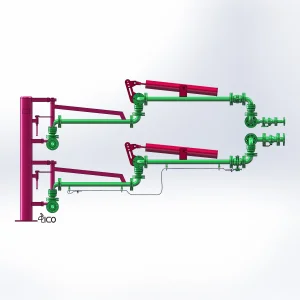
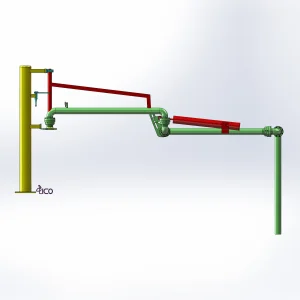
Togo Port ISO9001 LPG Top and Bottom Loading Arm

Togo Port ISO9001 LPG Top and Bottom Loading Arm

Technical Specs
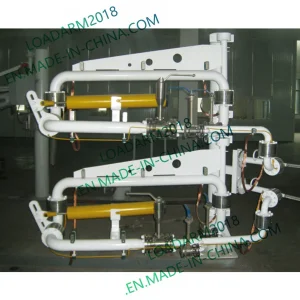
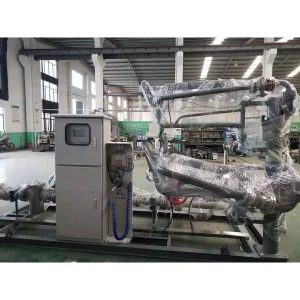
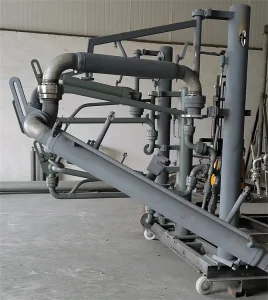
Lomé Terminal Bottom LPG Loading Arm

Lomé Terminal Bottom LPG Loading Arm for Truck Tanker Loading

Technical Specs
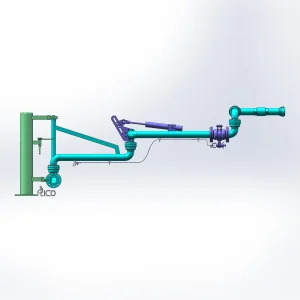
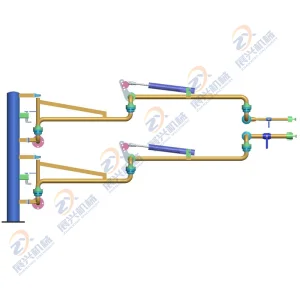
Togo Region LPG Tank Bottom Loading Arm with Vapor Recovery

Togo Region LPG Tank Bottom Loading Arm with Vapor Recovery

Technical Specs
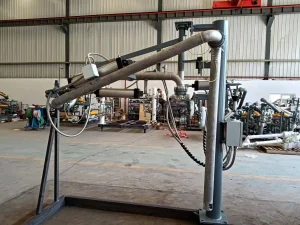
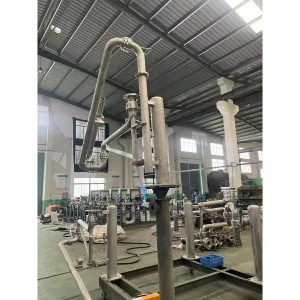
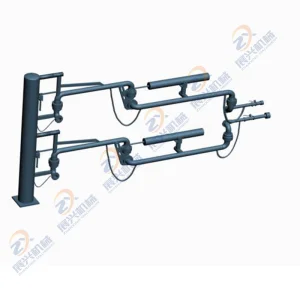
Lomé Storage Depot LPG Storage Terminal Truck Top Loading Arm

Lomé Storage Depot LPG Storage Terminal Truck Top Loading Arm

Technical Specs

The LPG Industrial & Logistics Landscape in Togo

Togo has positioned itself as the premier logistics and maritime trade gateway of West Africa, with the Port of Lomé acting as the single natural deep-water port in the region. As landlocked Sahelian nations—specifically Burkina Faso, Niger, and Mali—expand their energy infrastructure, Lomé's import terminals serve as the vital arterial source for Liquefied Petroleum Gas (LPG) distribution. Over the past decade, Togolese national strategies have shifted towards reducing carbon emissions and wood fuel reliance, triggering a massive domestic and cross-border demand for cleaner, safer LPG.

This growth has spurred deep investments in downstream storage facilities, such as bulk LPG tank farms and cylinder filling depots, along the Lomé-Ouagadougou corridor. Operating these high-pressure transport channels safely demands high-performance equipment. Truck LPG loading arms are critical touchpoints where high-pressure hydrocarbon liquids must transition safely between storage vessels and mobile road tankers.

"With heavy sea spray, high relative humidity, and temperatures regularly exceeding 35°C in coastal Togo, terminal operators cannot afford structural failures, product vapor losses, or seal degradation. The demand is transitioning fast from manual, unsafe hoses to fully automated, balanced loading arm assemblies."

Global LPG Transfer Dynamics & Regulatory Demands

Worldwide, the safety regulations governing LPG handling have grown increasingly stringent. Due to the high volatility of butane and propane blends, organizations such as API (American Petroleum Institute), SIGTTO (Society of International Gas Tanker and Terminal Operators), and the NFPA (National Fire Protection Association) advocate for rigid, articulated loading arms instead of conventional flexible hoses. Hoses are vulnerable to kinking, pressure spikes, and rapid atmospheric degradation, whereas rigid piping loading arms offer defined operational parameters.

Zero Emission

Integrates dual vapor recovery systems to eliminate fugitive emissions.

Fail-Safe Seals

Spring-loaded PTFE swivel joints prevent product leaks at high pressures.

Breakaway Safety

Emergency breakaway couplings disconnect safely during drive-away incidents.

Corrosion Proof

C5-M marine-grade offshore paint specification for tropical durability.

Modern installations prioritize Bottom Closed-Loading technology. Unlike top loading, bottom loading places the operator safely on the ground, minimizes static electricity buildup, and allows for the simultaneous coupling of liquid and vapor recovery lines. This decreases cycle times for high-volume tankers, boosting terminal throughput.

Leading Global Manufacturer: Shenzhen Liftora Arm Co., Ltd.

Shenzhen Liftora Arm Co., Ltd. is a professional manufacturer and engineering company specializing in the design, development, and production of advanced loading arm systems and fluid transfer solutions. Founded with a commitment to innovation, quality, and customer satisfaction, Liftora Arm has rapidly grown into a trusted partner for global energy, petrochemical, and industrial fluid handling projects. Our headquarters and manufacturing facilities in Shenzhen, China are equipped with modern production lines, precision fabrication tools, and rigorous testing equipment to ensure the consistent delivery of high‑performance products.
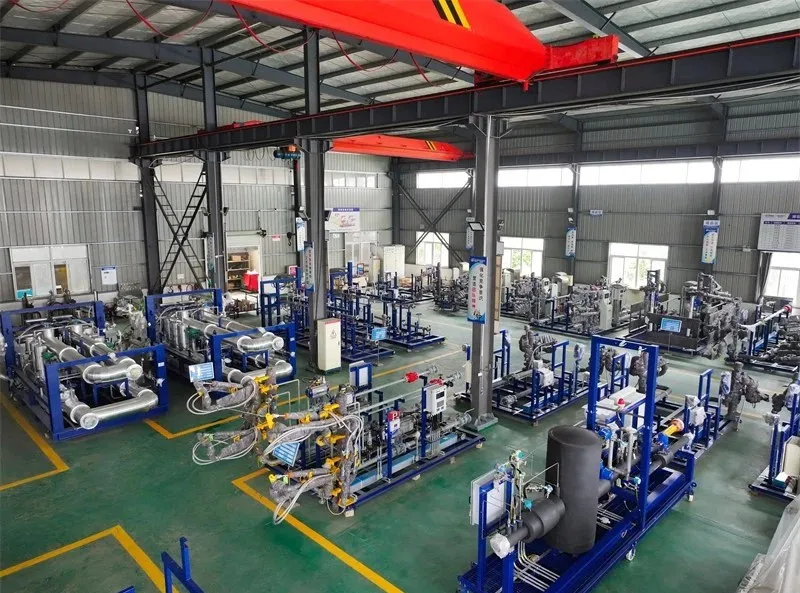
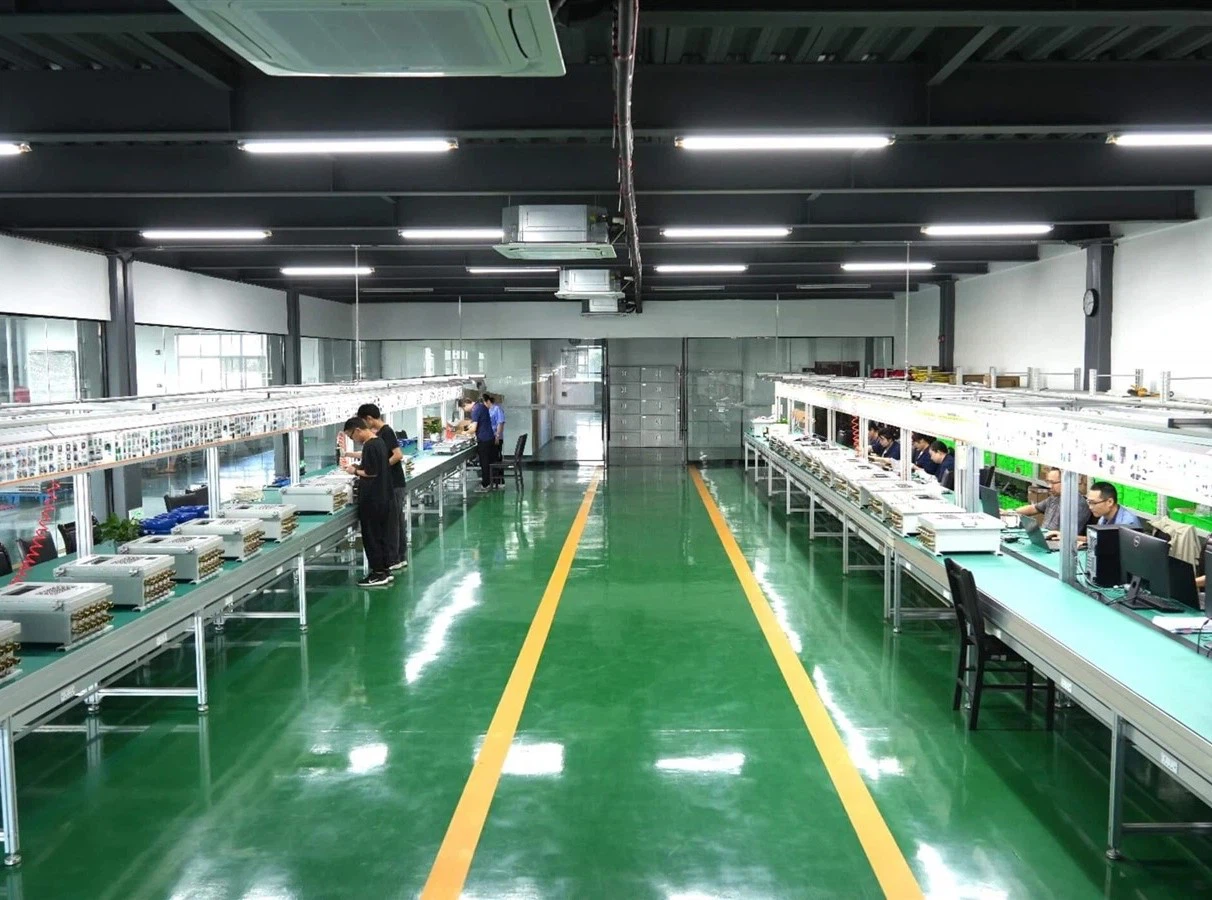
Liftora Arm Engineering Design Facility Liftora Arm Advanced Manufacturing Assembly

At Liftora Arm, we focus on the independent development and manufacturing of core components, enabling us to provide customers with robust marine loading arms, truck loading arms, and integrated metering skid systems tailored to diverse operating environments. Our comprehensive engineering service team collaborates closely with clients from initial concept through production and after‑sales support, ensuring cost‑effective solutions that meet stringent industry requirements. We adhere to international design and safety standards, and our products are engineered for durable performance, operational reliability, and ease of maintenance.

Committed to responsive service and global reach, Shenzhen Liftora Arm Co., Ltd. offers timely technical support, fast online responses, and reliable after‑sales services to clients worldwide. With a growing network of partners and distributors, Liftora Arm has earned the trust of engineering companies, terminal operators, and major industrial customers across Asia, Europe, Africa, and the Americas. Driven by continuous innovation and a customer‑centric approach, we strive to deliver fluid handling equipment that enhances efficiency, safety, and operational excellence in every application.

China Sourcing & Manufacturing Advantages for West African Buyers

Procuring heavy capital equipment from Chinese manufacturers like Shenzhen Liftora Arm Co., Ltd. offers Togolese and West African terminal owners significant advantages in cost efficiency, engineering customization, and delivery speed:

  • Advanced Industrial Clustering: Located in Shenzhen—China's premier high-tech manufacturing zone—Liftora leverages a highly efficient supply chain of precision metallurgy, high-accuracy CNC machining centers, and specialist surface coaters. This integration reduces production turnaround times by up to 40% compared to Western competitors.
  • Rigorous In-House Testing: Every swivel joint—the crucial mechanical component of the arm—undergoes comprehensive hydrostatic, pneumatic, and helium mass spectrometer leak testing prior to shipping, guaranteeing zero-tolerance safety compliance.
  • Direct Maritime Logistics: Shipping from Shenzhen Port directly to the Port of Lomé is streamlined, with established container and breakbulk shipping routes ensuring cost-effective transport and predictable transit times.
100%
Pressure Tested
15+
Years Engineering Exp.
C5-M
Marine Corrosion Rating
24/7
Technical Support

Localized Application Scenarios in Togo & the West African Sahel

Engineering fluid transfer systems for West Africa requires addressing specific physical and operating challenges. At Liftora, we design our products to handle these localized demands:

1. Coastline Port Depots (Lomé)

Lomé’s marine ports present high-salinity air. Our arms feature robust polyurethane coatings and 316L stainless steel internals to resist marine atmospheric corrosion over long operational lifespans.

2. Cross-Border Transport Hubs

LPG tankers traveling long distances to Ouagadougou or Niamey require fast, secure bottom-loading systems. Vapor recovery loops are critical to prevent product expansion venting in high ambient heat.

3. Inland Filling Stations

Inland depots deal with dust and variable product quality. Our dual-line vapor recovery designs prevent external particulate contamination, keeping the product pure and the environment clean.

Key Technological Trends in Truck LPG Loading Arms

The global energy transition and rising safety standards are driving key technical developments in loading arm design:

  • Digital Integration and Smart Monitoring: Modern loading systems are shifting from simple mechanical piping to smart digital nodes. Equipping swivels with wireless temperature, pressure, and position sensors allows operators to track arm positions and identify seal wear in real time.
  • Advanced Safety Overrides: Combining breakaway couplings with proximity sensor interlocks ensures that fluid lines instantly shut down if a tanker moves prematurely, preventing hazardous product spills.
  • Lightweight Alloys & Long-Life Springs: Improved spring-cylinder balance systems rely on high-grade compression springs that counter the arm's weight, allowing operators to position and align the assembly with minimal physical effort.

Frequently Asked Questions

Key technical and procurement insights for engineers and purchasing managers in Togo and West Africa

Q1: What are the differences between top loading and bottom loading arms for LPG trucks?
Top loading arms connect through the top dome of a tanker, which requires operators to work at height, increasing safety risks. Bottom loading arms connect at ground level, allowing operators to stand safely on the ground. Bottom loading is safer, minimizes static electricity buildup, simplifies the integration of vapor recovery systems, and is the preferred standard for new installations in West Africa.
Q2: How does coastal salinity in Lomé affect the design and material of LPG loading arms?
High salinity causes rapid oxidation and rust in standard carbon steels. To prevent this, Liftora uses low-temperature carbon steel (ASTM A350 LF2) for structural strength, treated with a marine-grade offshore paint system (C5-M standard). We use 316 stainless steel for critical components, fasteners, and fluid-wetted parts.
Q3: Why is a vapor recovery system essential for LPG operations in high-temperature regions?
In warm climates like Togo, LPG expands and turns to vapor quickly. When filling a tanker, this vapor must be captured to prevent pressure buildup. A vapor recovery line routes the gas back to the storage vessel, preventing emissions, keeping the work environment safe, and reducing product loss.
Q4: What certifications do Shenzhen Liftora Arm systems comply with?
All Liftora loading systems are designed, built, and tested in accordance with international standards, including ISO 9001 quality management, ASME B31.3 for process piping, API RP 1004 for bottom loading, and CE certifications.
Q5: How does the emergency breakaway coupling (SBC) function during a drive-away incident?
If a truck moves before the loading arm is disconnected, the breakaway coupling separates at a preset tension. Internal spring valves immediately seal both sides of the break, shutting off flow from the terminal and the tanker to prevent product spills and protect local terminal infrastructure.
Q6: What is the typical lead time and shipping process from Shenzhen to Togo?
Standard loading arms are manufactured and tested in 4 to 6 weeks. Shipping from Shenzhen Port to the Port of Lomé takes approximately 35 to 45 days, depending on carrier schedules and transit routes.
Our Complete LPG Loading Arm Catalog

Explore our full line of specialized fluid transfer equipment, built for industrial depots, chemical transport, and cryogenic applications
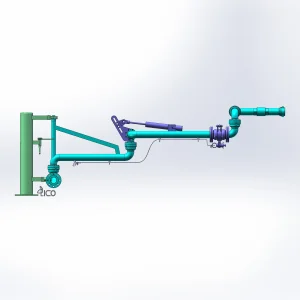
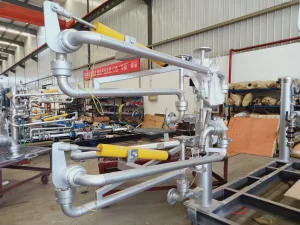
Togo Multi-Terminal Truck Rail Car Loading Arms for LPG Tanks

Togo Multi-Terminal Truck Rail Car Loading Arms for LPG Tanks

Technical Specs
Lomé Port Caustic Chemicals and Al2543 LPG Loading Arm

Lomé Port Caustic Chemicals and Al2543 LPG Loading Arm

Technical Specs
Togo Industrial Chemical LPG Loading Arm with Break Away Coupling

Togo Industrial Chemical LPG Loading Arm with Break Away Coupling

Technical Specs
Lomé Depot Loading Arm Al1403 for LPG Tanker Connections

Lomé Depot Loading Arm Al1403 for LPG Tanker Connections

Technical Specs
Togo Regional Transportation Equipment Al2543 LPG Loading Arm

Togo Regional Transportation Equipment Al2543 LPG Loading Arm

Technical Specs
Al2543 Loading Arm Cryogenic LPG Solution for Togo Terminals

Al2543 Loading Arm Cryogenic LPG Solution for Togo Terminals

Technical Specs
Al1502 Loading Arm Bottom Closed-Loading for LPG/Ammonia Tanker

Al1502 Loading Arm Bottom Closed-Loading for LPG/Ammonia Tanker

Technical Specs
Al2504 Loading Arm Closed-Loading for Togo LPG/Ammonia

Al2504 Loading Arm Closed-Loading for Togo LPG/Ammonia

Technical Specs
Loading Arm Al1502 for Togo LPG Transfer Operations

Loading Arm Al1502 for Togo LPG Transfer Operations

Technical Specs
Al1401 Loading Arm Specialized LPG Loading and Unloading

Al1401 Loading Arm Specialized LPG Loading and Unloading

Technical Specs
Lomé Standard LPG Bottom Loading Arm for Liquefied Gas

Lomé Standard LPG Bottom Loading Arm for Liquefied Gas

Technical Specs
Double Pipes Bottom Loading Arm with Vapor Pipeline

Double Pipes Bottom Loading Arm with Vapor Pipeline

Technical Specs

Ready to upgrade your LPG storage terminal or road tanker fleet in Togo?

Send Inquiry Now