As global energy demands shift toward complex logistics, safe and efficient fluid transfer at sea and dock operations dictates the performance profile of petrochemical infrastructure.
Shenzhen Liftora Arm Co., Ltd. stands as a key developer in the design, development, and production of loading arm systems and fluid transfer solutions. Since our founding, we have focused on local manufacturing excellence coupled with advanced mechanical engineering. By developing core structural components in-house, we construct systems that ensure seamless flow rates, minimal environmental hazard, and reliable mechanical integrity.
This technical whitepaper outlines the structural parameters, industry trends, and deployment strategies required for marine fuel transfer hoses, loading arms, and automated metering skids. It serves as a benchmark guide for offshore EPC contractors, terminal operators, and international procurement managers seeking high-reliability fluid transfer systems.
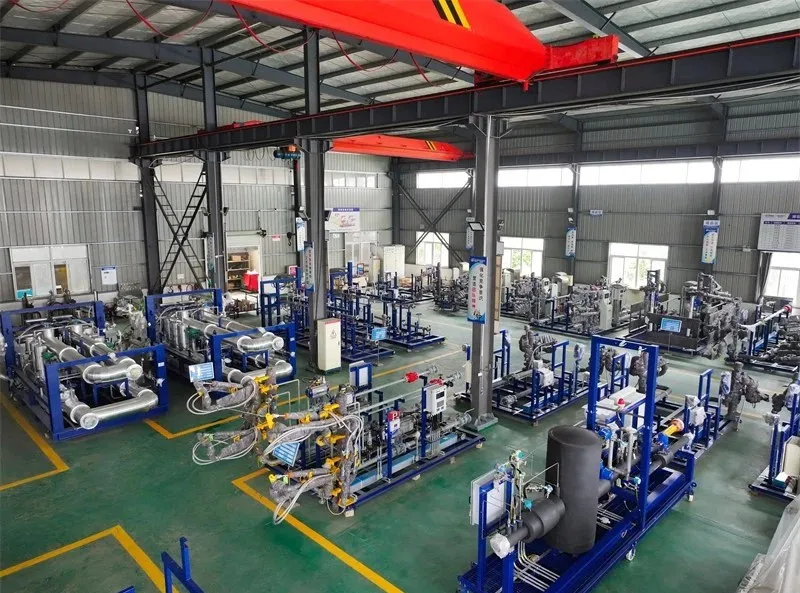
Procuring marine fuel transfer hoses and loading system accessories from China requires deep alignment with international safety frameworks. Systems must operate under heavy tidal motions, dynamic weather, and corrosive offshore environments.
Marine transfer systems must align strictly with international regulations, including OCIMF (GMPHOM 2009) guidelines, EN 1765, and ISO 1823 standard protocols to secure zero-leak operations during ship-to-shore bunkering.
Inner lining compositions must withstand aggressive hydrocarbons, high aromatics, and additives. Employing HNBR, Nitrile, or specialized fluoropolymer liners prevents elastomer swelling and structural micro-cracking.
Offshore hoses experience high tension and bending cycles. Utilizing multi-layered high-tensile steel wire reinforcing helices prevents kinking under maximum vacuum pressure (-0.85 bar) and dynamic bending.
| Performance Parameter | Operational Standard Requirement | Liftora Engineering Standard | Material / Design Integration Method |
|---|---|---|---|
| Working Pressure (WP) | 15.0 Bar (Nominal) | 19.0 Bar (Enhanced Safety Margin) | Multiple wraps of high-strength synthetic fabric with embedded steel helix |
| Burst Pressure Ratio | Min 4:1 safety factor | 5:1 safety factor (Tested) | Continuous vulcanization of structural layers with polyurethane outer jacket |
| Min. Bend Radius (MBR) | 6 x Nominal Diameter (ND) | 4.5 x ND (Optimized Flexibility) | Optimized pitch angle of spiral wire reinforcement layers |
| Electrical Continuity | Discontinuous or Continuous configurations | Dual configurations available (<10 ohms/assembly) | Integrated static copper bonding wires with marine-grade connection flanges |
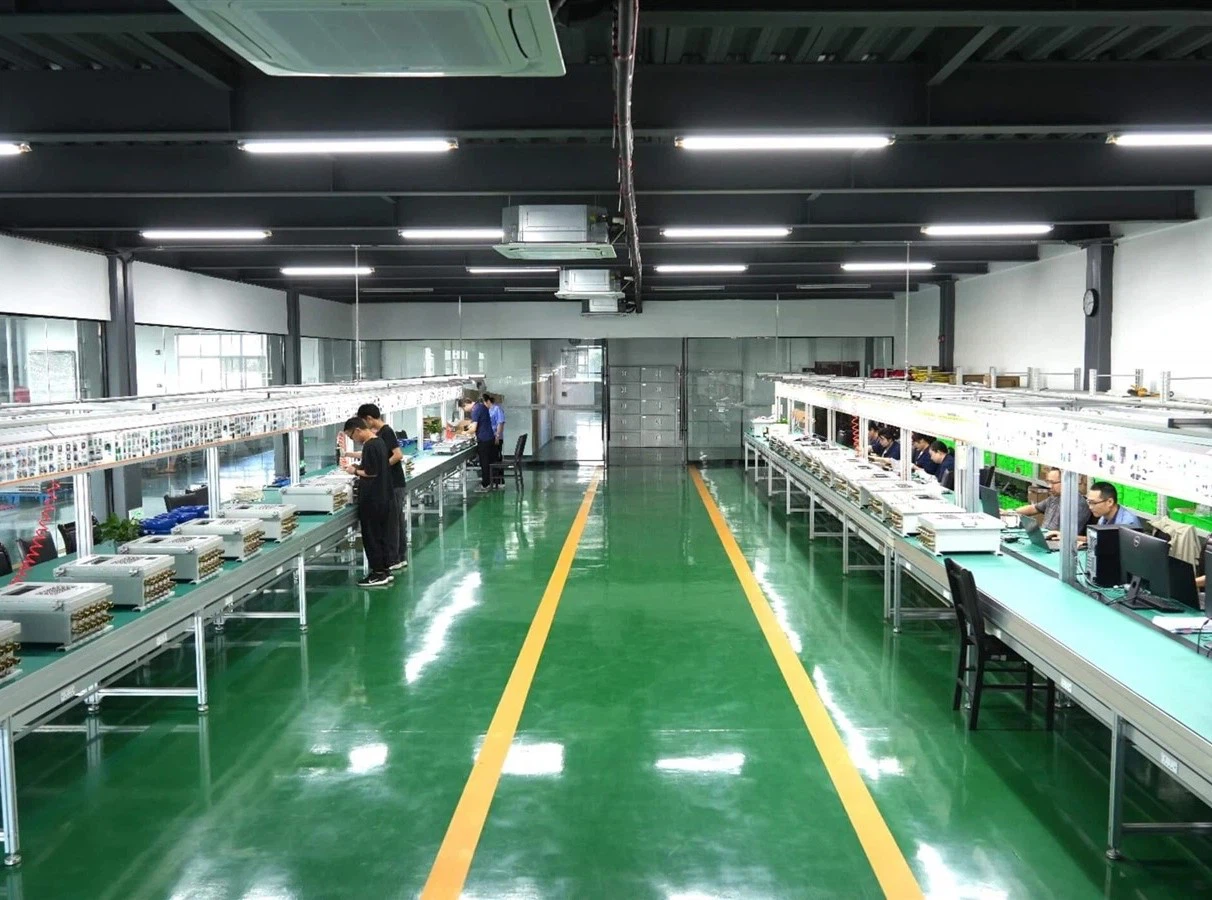
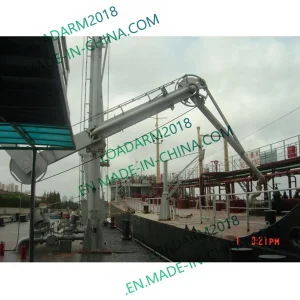
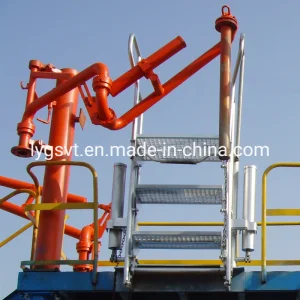
Efficient terminal setup requires a cohesive coupling of flexible transfer hoses and rigid loading structures. At Shenzhen Liftora Arm Co., Ltd., we specialize in bridging this mechanical interface.
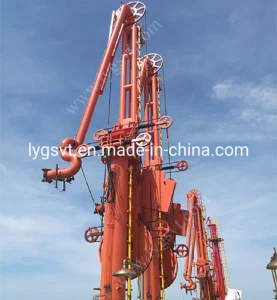
By producing both rigid marine loading arms (for heavy-duty tanker transfer) and high-performance custom manifolds, we ensure that fluid dynamics are balanced throughout the loading cycle. Our design process factors in pressure surge calculations, water hammer prevention, and thermal expansion relief. This protects both the land-side infrastructure and the marine vessel's manifolds from high tensile stress during unexpected swells.
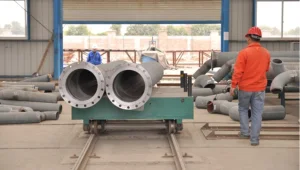
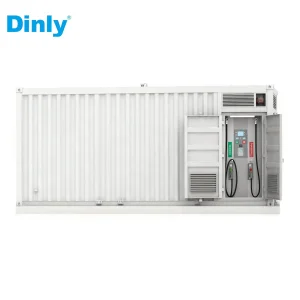
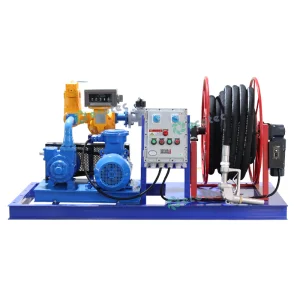
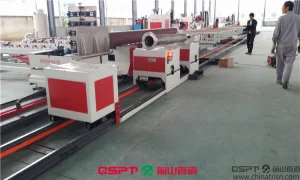
Our solutions span from heavy-duty rail conveying mechanisms like the PPHTS-10T2 Prefabrication System to integrated skid-mounted control stations, assuring terminal operators of unified controls and reduced component wear.
Modern bunkering terminals are shifting from traditional heavy fuel oils to alternative energy matrices, requiring adaptions in chemical transfer materials and safety protocols.
The rise of LNG, hydrogen-carriers, and green ammonia bunkering requires transfer systems compatible with cryogenic temperatures and stress corrosion cracking. Advanced elastomers and double-wall barrier systems are now essential to protect operators from chemical toxicity.
Smart marine hoses are emerging with integrated fiber optic sensors to monitor internal pressure, thermal gradients, and structural deflection in real-time. This transitions terminals from reactive maintenance to predictive asset management.
Minimizing response times during emergency disconnect situations is paramount. Electro-hydraulic Emergency Release Systems (ERS) coupled with dry-break couplings prevent environmental contamination during extreme tidal variations.
Shenzhen Liftora Arm Co., Ltd. serves a diverse portfolio of international clients, providing localized engineering consultation, prompt response rates, and reliable onsite commissioning.
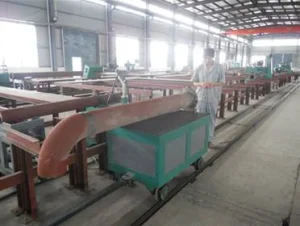
From our manufacturing hub in Shenzhen, China, we operate modern precision fabrication lines capable of processing high-volume petrochemical orders. We maintain strategic alliances with global marine verification bodies (such as ABS, DNV, and Lloyd’s Register) to certify our equipment under custom regulatory frameworks. Our engineering staff is equipped to conduct computational fluid dynamics (CFD) analysis and finite element analysis (FEA) to simulate your specific harbor draft, current speeds, and tanker deck heights prior to fabrication.
This active verification process eliminates common commissioning delays, assuring global procurement managers that Liftora systems will perform optimally from day one.
Detailed technical answers to common questions raised by procurement engineers and terminal designers.
Composite marine hoses consist of multiple layers of thermoplastic films and fabrics held between internal and external wire spirals. They offer high chemical compatibility and flexibility but are less suited for high abrasion or severe mechanical impact. Rubber marine transfer hoses utilize thick, continuous elastomeric linings reinforced with steel wire helices and fabric plies, providing superior resistance to external wear, abrasion, and harsh sea-states, making them preferred for rough ship-to-ship bunkering.
Depending on the terminal's safety protocol to prevent galvanic current flow between ship and shore, we customize our systems. For electrically continuous setups, copper bonding wires are structurally connected to the metal flanges. For electrically discontinuous setups, we insert high-insulation gaskets and non-conductive sleeves to isolate charge buildup and prevent spark generation during connection or disconnection.
Every loading arm and hose assembly undergoes strict testing: Hydrostatic Pressure Testing (at 1.5 times the maximum working pressure), Vacuum/Suction Testing (confirming structural integrity at negative pressures), Electrical Continuity verification, and Weld Radiography (NDT) for critical structural joints. Standard documentation includes material traceability certificates, mill test reports, and third-party inspection clearances.
Yes. Our custom-fabricated chemical and petroleum marine loading arms can be fitted with jacketed lines or trace heating elements (electric/steam tracing). This prevents viscous petroleum products, crude oils, or bitumens from cooling and hardening in the pipeline, maintaining optimal flow kinetics and preventing pressure spikes.
We integrate Emergency Release Systems (ERS) featuring double ball valves or dual-disc checks within our loading arms and hose assemblies. Upon activation (either via auto-detect limits or manual triggers), the valves instantly close on both sides before the physical breakaway coupling separates, containing the fluid and securing the marine ecosystem from spills.
 Liftora Arm