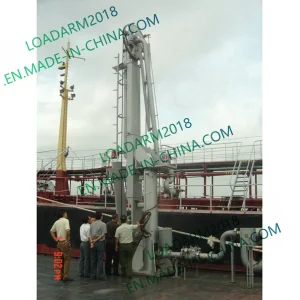
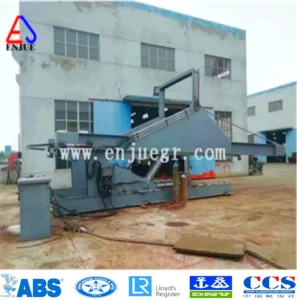
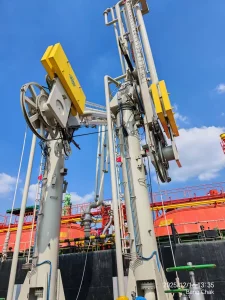
In the harsh environments of offshore wind farms, oil & gas platforms, and marine substations, personnel and cargo transfer operations face extreme dynamic loads. The industry has transitioned from high-risk crane basket transfers to highly sophisticated Walk-to-Work (W2W) systems. Modern offshore gangways utilize active motion compensation (AMC) to negate vessel motions, providing a stable, safe, and highly efficient path between floating vessels and fixed structures.
Utilizing high-speed sensors, real-time control algorithms, and hydraulic/electric actuators to actively counter the 6 Degrees of Freedom (DoF) of ship motions in real-time, achieving near-zero tip displacement.
Advanced compensating systems allow safe personnel and cargo transfers in significant wave heights ($H_s$) of up to 4.5 meters, minimizing vessel downtime and optimizing offshore maintenance campaigns.
Designed and built in strict accordance with DNV-ST-0358, ABS Walk-to-Work Guidelines, and EN 13852-1 rules. Features redundancy loops, triple sensor verification, and automated emergency quick-release valves.
Identifying the right partner for Walk-to-Work (W2W) gangways requires evaluating engineering capabilities, class certifications, operational track records, and support networks. Here is an exhaustive analysis of the market's leading players.
Ampelmann is universally recognized for pioneered dynamic motion compensation technology. Its hexapod systems provide full six-dimensional active compensation (surge, sway, heave, roll, pitch, yaw). Designed primarily for the oil & gas and offshore wind industries, Ampelmann systems are renowned for operational reliability under high sea states, with systems ranging from compact A-type units to heavy-duty cargo handling solutions.
SMST designs and builds a diverse portfolio of offshore access systems. Their Telescopic Access Bridges (TAB) are designed for both personnel transfer and heavy cargo handling, and can be outfitted with integrated lift towers and crane functions. SMST stands out for modular layouts that can be easily customized, allowing operators to scale from basic passive setups to fully automated active motion compensation systems.
Uptime International is a dominant force in the offshore wind and marine logistics market, specializing in specialized Walk-to-Work gangway systems integrated directly into Service Operation Vessels (SOVs). Known for high-speed logistics and automated passenger elevators, Uptime's systems are optimized for rapid turbine transfers, minimizing cycle times and increasing offshore wind farm maintenance efficiency.
Part of Cargotec, MacGregor is a global leader in maritime cargo flow and offshore load handling. Their horizon gangways feature highly optimized active electric drives that reduce environmental impact and power consumption compared to traditional hydraulic variants. Backed by an extensive global marine network, they deliver top-tier support for critical operations.
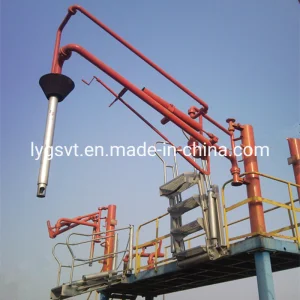
Shenzhen Liftora Arm Co., Ltd. has established itself as an engineering powerhouse in marine loading systems, structural components, and custom offshore fluid and access integration. Operating from a highly modern manufacturing hub in Shenzhen, China, Liftora specializes in combining precision mechanical design, certified materials, and digital control integration. Liftora’s engineering service team partners with global operators to deliver custom-fit structural arms, mooring access components, and complex piping interfaces designed to operate in severe environments.
Barge Master specializes in motion compensation systems for marine cranes, platforms, and gangways. Their systems stabilize standard equipment on supply vessels, converting cost-effective standard platforms into highly stable work environments. Their BM-GANGWAY is a robust solution that stabilizes personnel transfer and light cargo handling, ensuring high performance in complex sea conditions.
Royal IHC is renowned for maritime system design, shipbuilding, and complex integration projects. They provide specialized motion-compensated gangways as part of a fully integrated vessel package, matching gangways with dynamic positioning systems (DP), heavy-duty cranes, and custom ship designs. Their gangways offer optimized ergonomics and high-durability mechanisms.
Safeway is part of the Van Aalst Group, designing systems that deliver unique capabilities such as mast-integrated height adjustment and continuous roll-compensation. Safeway units enable safe access to multiple levels of wind turbine substations or platform decks without repositioning the vessel, maximizing transfer rates and speed.
Palfinger Marine offers a wide range of marine equipment, deck machinery, and life-saving appliances. Their offshore access systems focus on reliability and low maintenance. Combining structural strength with user-friendly control layouts, Palfinger systems are ideal for long-term operations on oil rigs, wind farms, and naval support ships.
Osbit specializes in tailor-made offshore access systems designed to solve unique operational challenges. They deliver custom telescopic and articulating gangway bridges for vessels operating in unique conditions or restricted spaces, matching structural limits with specific load profiles and advanced telemetry.
Shenzhen Liftora Arm Co., Ltd. is a professional manufacturer and engineering company specializing in the design, development, and production of advanced loading arm systems and fluid transfer solutions. Founded with a commitment to innovation, quality, and customer satisfaction, Liftora Arm has rapidly grown into a trusted partner for global energy, petrochemical, and industrial fluid handling projects. Our headquarters and manufacturing facilities in Shenzhen, China are equipped with modern production lines, precision fabrication tools, and rigorous testing equipment to ensure the consistent delivery of high‑performance products.
At Liftora Arm, we focus on the independent development and manufacturing of core components, enabling us to provide customers with robust marine loading arms, truck loading arms, and integrated metering skid systems tailored to diverse operating environments. Our comprehensive engineering service team collaborates closely with clients from initial concept through production and after‑sales support, ensuring cost‑effective solutions that meet stringent industry requirements. We adhere to international design and safety standards, and our products are engineered for durable performance, operational reliability, and ease of maintenance.
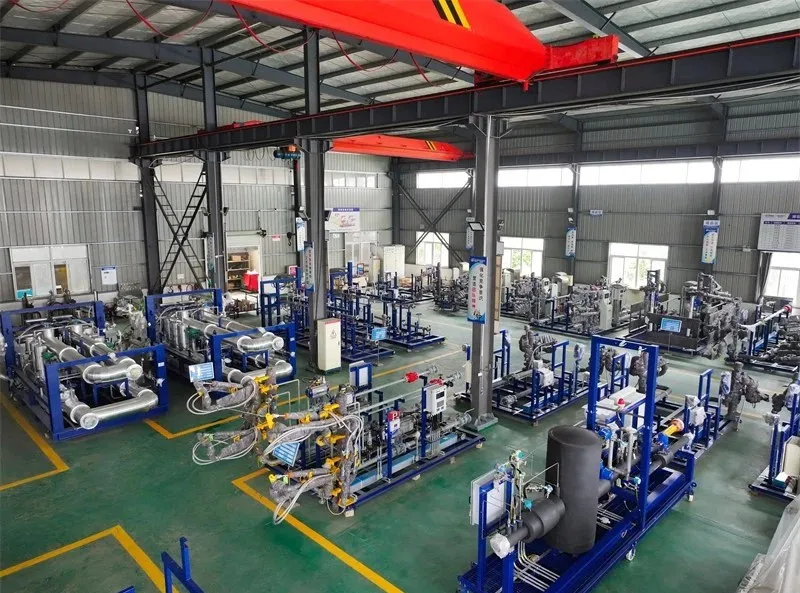
Committed to responsive service and global reach, Shenzhen Liftora Arm Co., Ltd. offers timely technical support, fast online responses, and reliable after‑sales services to clients worldwide. With a growing network of partners and distributors, Liftora Arm has earned the trust of engineering companies, terminal operators, and major industrial customers across Asia, Europe, Africa, and the Americas. Driven by continuous innovation and a customer‑centric approach, we strive to deliver fluid handling equipment that enhances efficiency, safety, and operational excellence in every application.
By leveraging Advanced Finite Element Analysis (FEA) and dynamic simulation software, Liftora Arm optimizes structural weight while ensuring absolute failure safety in critical stress areas. This makes our structural steel parts and pipeline connections ideal components for deep-water marine configurations.
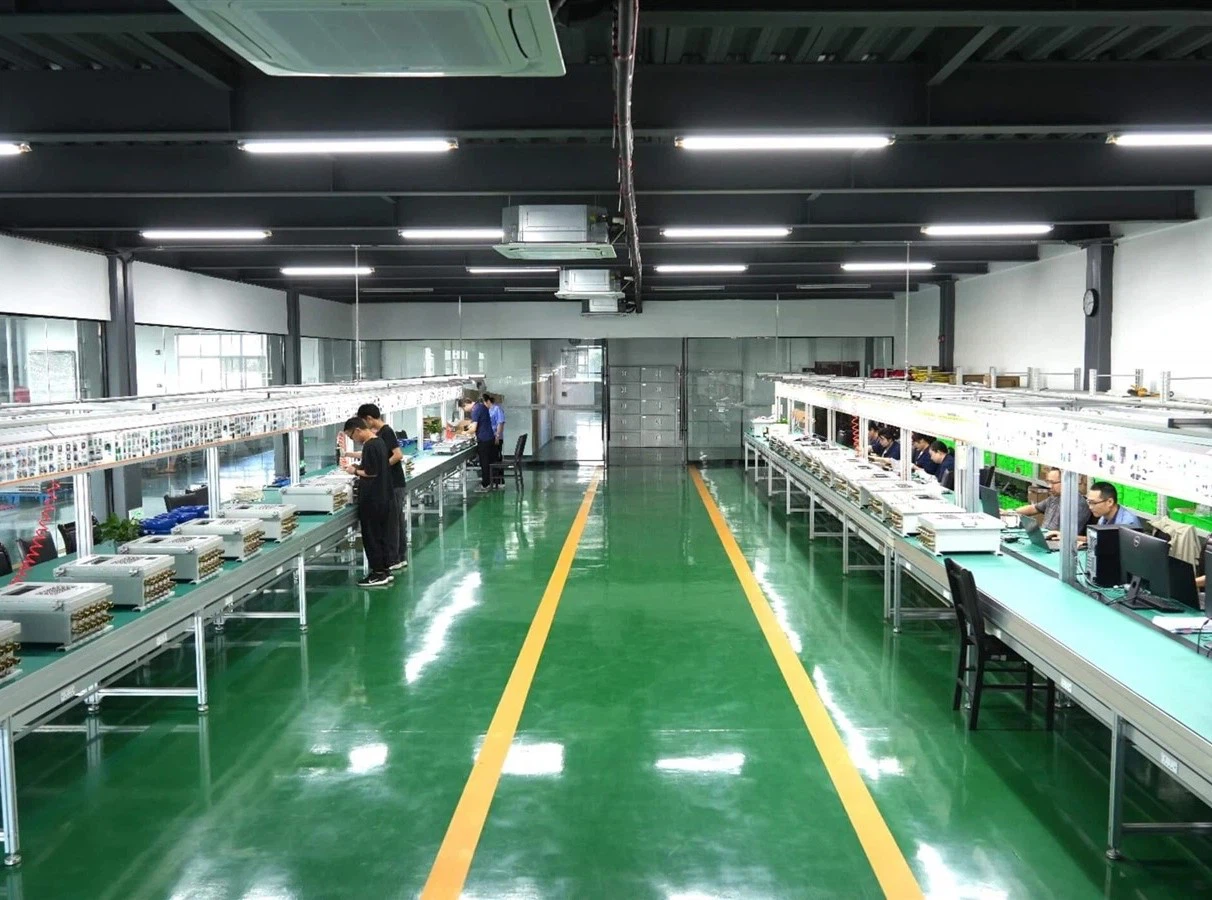
China’s manufacturing landscape has transitioned from high-volume production to high-tech, precision marine and offshore engineering. Sourcing components or complete structures from Shenzhen offers distinct operational benefits for global operators.
Direct integration with domestic high-tensile steel mills (e.g., S690QL, S960QL) ensures that structural arms and loading structures maintain integrity in low-temperature marine zones without prohibitive raw material premiums.
With localized fabrication in Shenzhen's technology cluster, engineering firms reduce manufacturing overheads, permitting higher investment in top-tier safety certifications (DNV, ABS, LR) and high-redundancy sensors.
Proximity to Shenzhen and Hong Kong deep-water ports facilitates rapid, secure logistics. Massive oversized structural pieces, including complete loading arms and gangway pedestals, can be dispatched globally via specialized heavy-lift vessels.
Offshore gangway and marine loading arm operations must comply with rigorous international standards to ensure safety during transfers. Sourcing decisions must align with these classification frameworks.
| Standard / Rule | Focus Area | Target Systems | Critical Compliance Criteria |
|---|---|---|---|
| DNV-ST-0358 | Offshore Gangways & Access Systems | W2W Active/Passive Gangways | Dynamic load calculations, safety factors, fail-safe disconnect logic, redundancy setups. |
| ABS Walk-to-Work Guide | Marine Personnel Transfer Operations | Vessel-to-Platform Access Bridges | Dynamic positioning (DP) linkage, physical vessel offset tolerance limits, emergency release timing. |
| EN 13852-1 | Marine Crane and Offshore Lifting Standards | 3D Compensating & Heavy Lift Arms | Material fatigue calculations, structural design margins for extreme temperatures, hook speed limits. |
| ISO 12944 (C5-M / CX) | Corrosion Protection Coating Quality | All Exposed Steel Surfaces | Paint system thickness and testing procedures to resist severe maritime atmospheric corrosion. |
Every compliant W2W gangway system must incorporate a robust, dual-stage Emergency Release System. If the vessel drifts beyond the safety envelope defined by its dynamic positioning (DP2/DP3) footprint, the ERS automatically locks the gangway, retracts the telescopic bridge, and decouples the connection within milliseconds to prevent structural collapse or injury.
Integrating 3D LiDAR, radar telemetry, and visual AI models allows gangways to identify target landing platforms, calculate structural offsets, and connect autonomously without human intervention.
Replacing traditional hydraulic power units (HPUs) with all-electric direct-drive actuators reduces energy consumption, eliminates the risk of environmental oil spills, and decreases overall system weight.
Cloud-linked IoT sensors continuously monitor structural vibrations, valve response speeds, and actuator pressure loads, enabling shore teams to identify potential faults before they trigger downtime.
 Liftora Arm