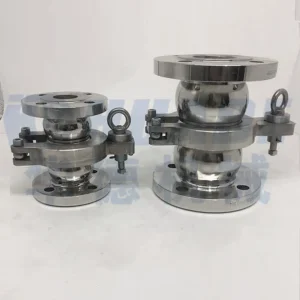
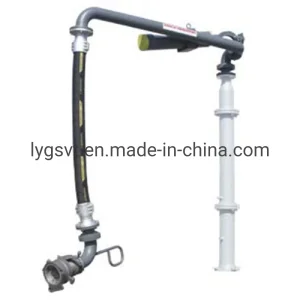
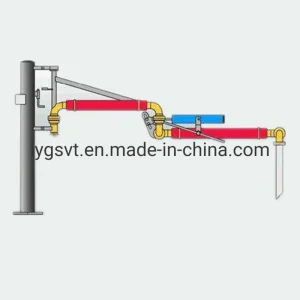
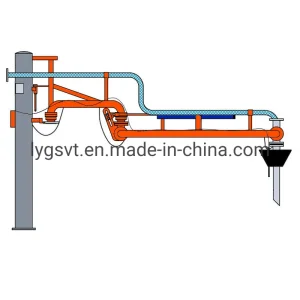
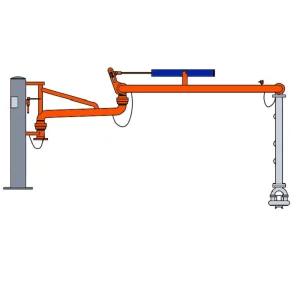
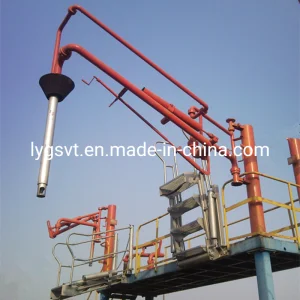
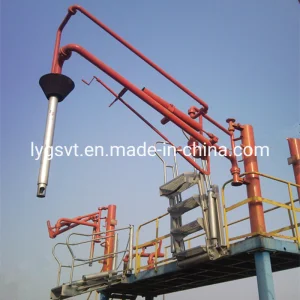
High-durability top land loading arms and boom cranes optimized for critical infrastructure, featuring dual-valve emergency breakaway couplers for quick-release operations.
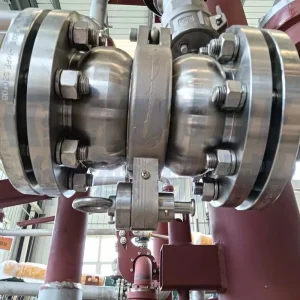
Equatorial Guinea stands as a pivotal hub within the West African energy landscape. Key terminal locations—such as Punta Europa (Bioko Island), Luba Freeport, and development projects in the southern continental regions near Kogo and Bata—require rigorous fluid management equipment. The region's economy relies heavily on crude oil exports, LNG shipping, and derivative petrochemical handling. Operations involve loading tankers in challenging open-water offshore environments where wave motion, high humidity, and marine salinity levels accelerate wear and degrade traditional machinery.
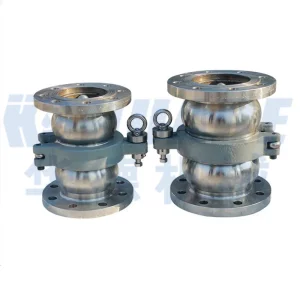
To prevent catastrophic oil spills and safeguard terminal staff, incorporating Emergency Breakaway Couplers (EBC) and robust loading arms is vital. A sudden vessel drift during tanker loading can lead to high-pressure line failure if not managed by a fail-safe release system. Standard loading installations face severe threats from dynamic ocean currents and sudden storms common in the Gulf of Guinea. As a result, terminal operators are shifting from manual setups to automated, dual-valve breakaway solutions that shut off flow instantly upon physical separation, protecting both the vessel and the offshore jetty.
Tested and calibrated under international ocean terminal guidelines (OCIMF).
How engineered breakaway couplers and advanced articulated arm structures preserve piping integrity under high axial and shear loading conditions.
Our engineering pipeline targets zero-leakage safety criteria using dual spring-loaded valve internals. When tension exceeds calibrated breakaway thresholds, the coupler separates, allowing both the inbound and outbound valve faceplate components to seal instantly.
"Integrating high-safety knuckle boom cranes with quick-release breakaway valves ensures terminal structures suffer zero bend fatigue when tankers drift beyond safe operating envelopes."
Compatible with hydraulic activation controls and manual release mechanisms.
The core technology behind modern safety loading arms is the **Emergency Release System (ERS)**. Unlike simple shear pins, Liftora's emergency breakaway couplers incorporate double ball or double disc valves. In the event of emergency separation (whether mechanical cable-triggered or hydraulic cylinder-triggered):
From offshore marine loading to road tanker fleet loading terminals, our systems provide continuous performance under demanding operating conditions.
Designed for FPSOs and marine tankers, featuring dynamic swivels that handle heave, pitch, and roll while securing hydrocarbons under pressure.
Corrosion-resistant alloys and vapor recovery pathways allow safe loading of volatile aromatics, asphalt, bitumen, and raw crude oils.
High-turnover terminal operations require robust top and bottom loading arms with fast coupling adapters and reliable vapor return piping.
Retaining our heritage of precision engineering, component self-sufficiency, and global support structures.
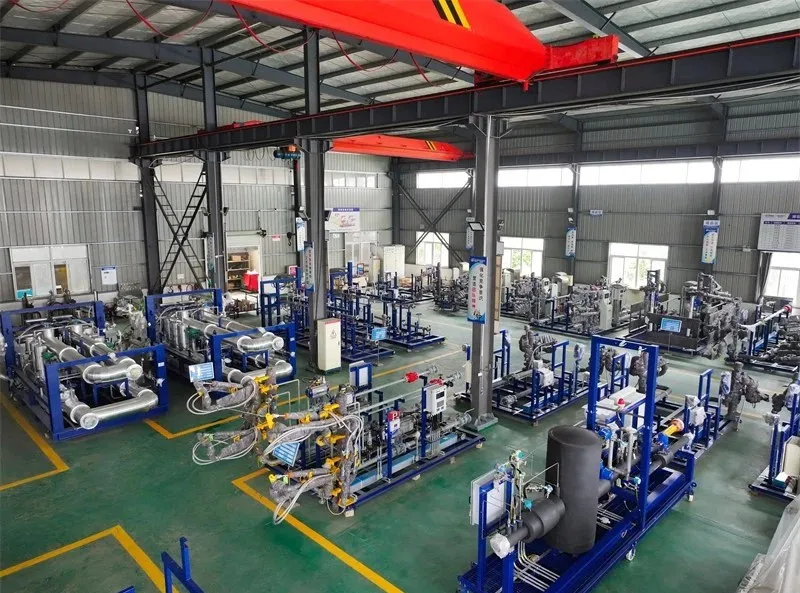
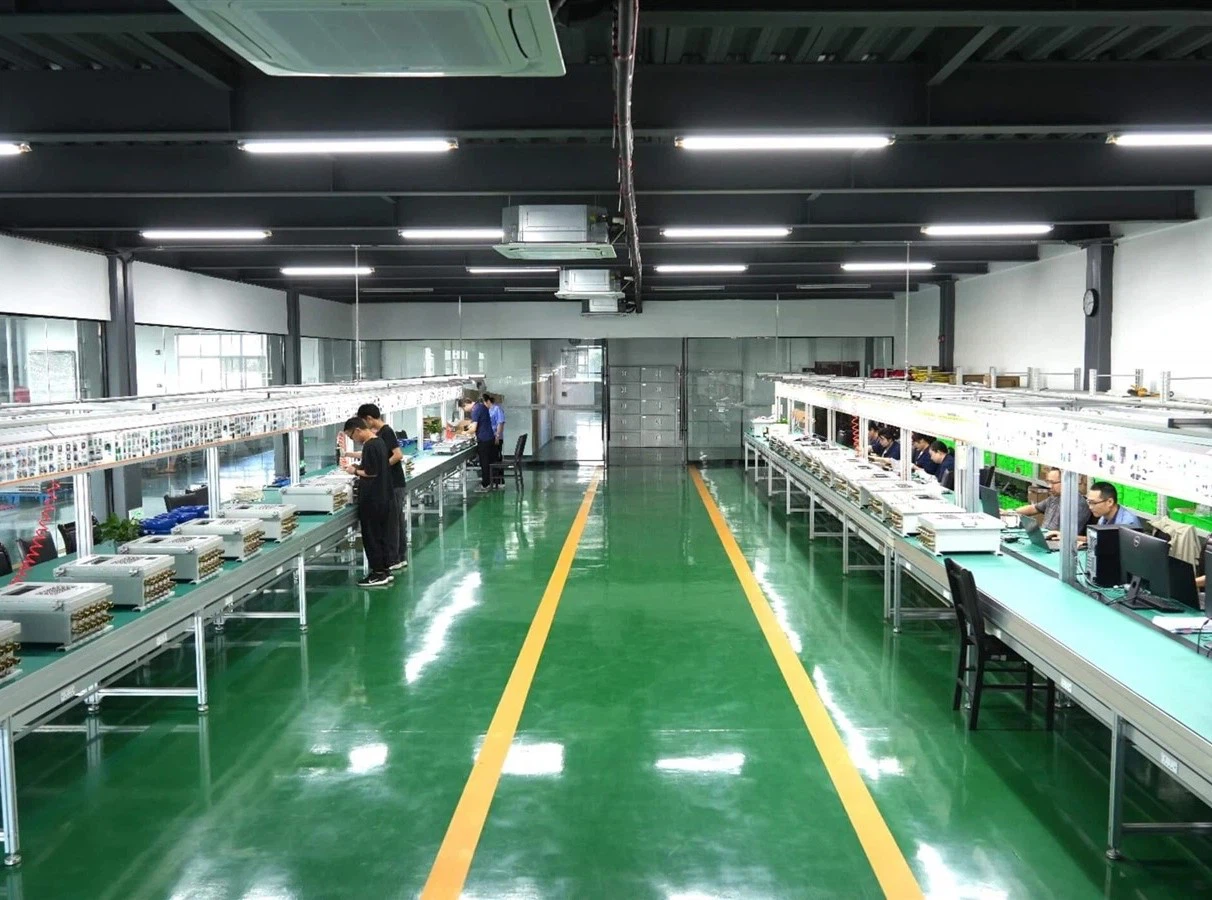
Shenzhen Liftora Arm Co., Ltd. is a professional manufacturer and engineering company specializing in the design, development, and production of advanced loading arm systems and fluid transfer solutions. Founded with a commitment to innovation, quality, and customer satisfaction, Liftora Arm has rapidly grown into a trusted partner for global energy, petrochemical, and industrial fluid handling projects. Our headquarters and manufacturing facilities in Shenzhen, China are equipped with modern production lines, precision fabrication tools, and rigorous testing equipment to ensure the consistent delivery of high‑performance products.
At Liftora Arm, we focus on the independent development and manufacturing of core components, enabling us to provide customers with robust marine loading arms, truck loading arms, and integrated metering skid systems tailored to diverse operating environments. Our comprehensive engineering service team collaborates closely with clients from initial concept through production and after‑sales support, ensuring cost-effective solutions that meet stringent industry requirements. We adhere to international design and safety standards, and our products are engineered for durable performance, operational reliability, and ease of maintenance.
Committed to responsive service and global reach, Shenzhen Liftora Arm Co., Ltd. offers timely technical support, fast online responses, and reliable after‑sales services to clients worldwide. With a growing network of partners and distributors, Liftora Arm has earned the trust of engineering companies, terminal operators, and major industrial customers across Asia, Europe, Africa, and the Americas. Driven by continuous innovation and a customer‑centric approach, we strive to deliver fluid handling equipment that enhances efficiency, safety, and operational excellence in every application.
All systems ship with comprehensive installation kits, compliance certifications (including API, ASME, ATEX), and complete spare part replacement protocols optimized for West African shipping routes.
Send Inquiry NowDeploying heavy industry equipment in Malabo or Bata demands alignment with local laws and regulations overseen by the Ministry of Mines and Hydrocarbons (MMH) of Equatorial Guinea. Under national environmental guidelines, operators must present reliable safeguards against hazardous spills. The application of Liftora's emergency breakaway technologies provides clear proof of safety compliance for national audits.
Our units align with global engineering frameworks, assuring trouble-free integration into multinational terminals:
By producing core components at our advanced facility in Shenzhen, China, we ensure high quality control, rapid assembly times, and structural traceability. This vertical integration allows us to supply Equatorial Guinea terminals with custom-engineered systems at highly competitive costs compared to traditional Western European manufacturers.
Our processes feature CNC precision milling, robotic arm welding, and pressure testing setups that run every unit through double-limit hydro-testing before dispatch.
Explore our range of heavy-duty, robotic, and knuckle boom loading arms, engineered with emergency breakaway couplers for top and bottom loading configurations.
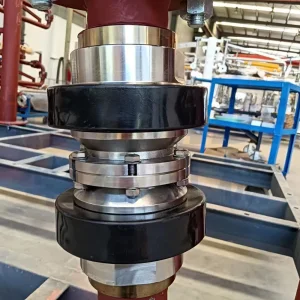
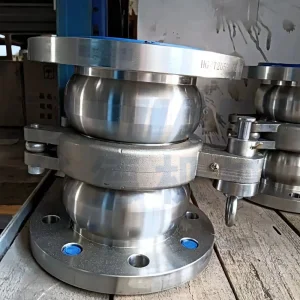
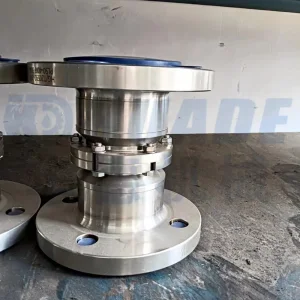
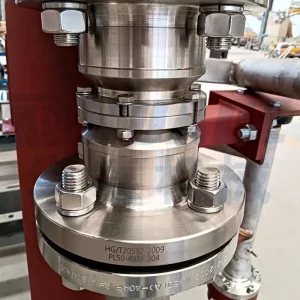
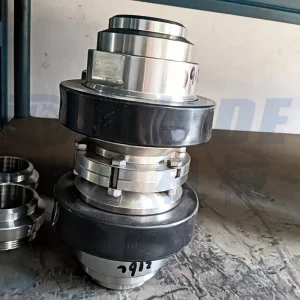
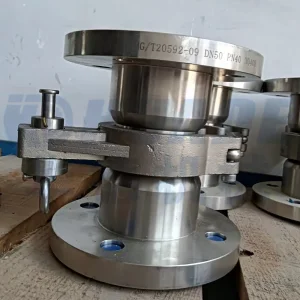
Optimized closed-loop top loading arms and rail terminal pump systems designed to process heavy petrochemicals and volatile vapors safely.
Answers to common engineering and operational questions regarding breakaway couplers and loading arm maintenance in West African terminals.
Bring industry-certified safety and reliable fluid handling to your terminals in Equatorial Guinea. Request a technical quote, custom drawing package, or compliance documents for your project.
Send Inquiry Now Liftora Arm