Explore our precision-engineered industrial loading arms, robotic systems, and fluid automation solutions deployed globally.
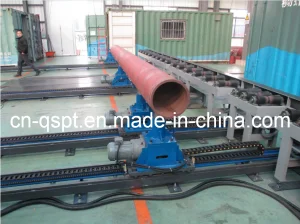
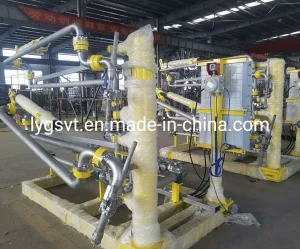
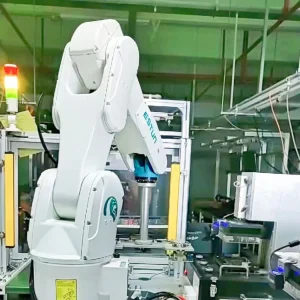
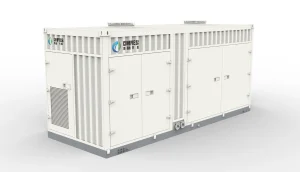
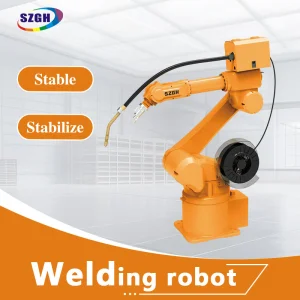
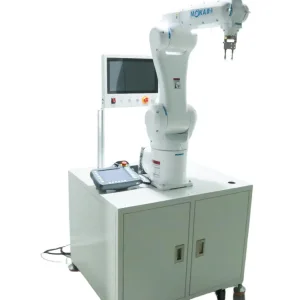
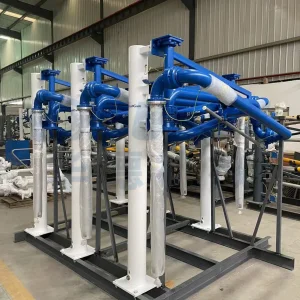
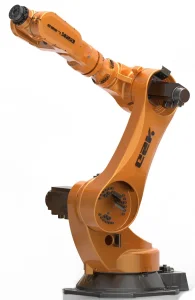
In an era where the demand for cleaner energy transition systems is intensifying globally, safe and efficient transportation of liquefied natural gas (LNG) stands at the pinnacle of engineering challenges. Shenzhen Liftora Arm Co., Ltd. has established itself as an authoritative leader in high-performance cryogenic fluid systems and robotic arm solutions.
Founded with a clear dedication to safety, precision, and state-of-the-art innovation, Liftora Arm specializes in the independent research, engineering, and manufacturing of critical LNG marine loading arms, industrial truck loading systems, and integrated metering skids. By owning the entire manufacturing and technical process—from initial conceptual dynamics simulation to final cryo-testing—we offer terminal operators and engineering firms unmatched quality control and compliance assurance.
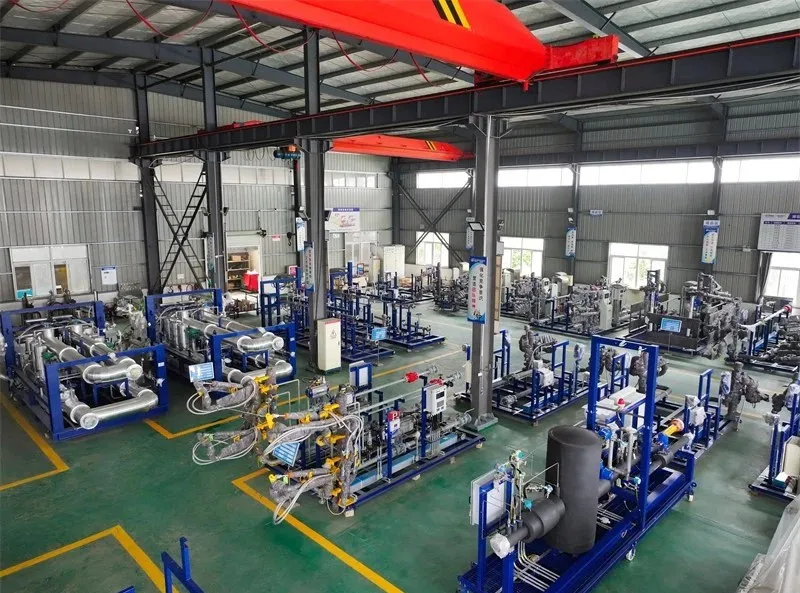
Our manufacturing plant in Shenzhen, China, integrates modern processing machinery, high-precision CAD/FEA simulation software, and specialized cryogenic test yards. This ensures that every marine LNG loading system we manufacture satisfies rigorous international criteria, including the ISO 18683, EN 1474 standards, and major marine classification society requirements (DNV, ABS, Lloyd's Register, CCS).
Our integrated technical team is comprised of seasoned professionals with decades of cumulative experience in fluid dynamics, structural metallurgy, marine engineering, and automated control logic. Whether operating in coastal peak-shaving facilities, offshore ship-to-ship (STS) bunkering platforms, or complex chemical industrial yards, Liftora systems guarantee operational reliability.
Liquefied Natural Gas (LNG) is transported at a cryogenic temperature of approximately -162°C (-260°F). Handling structural steel and seals under these conditions requires specialized designs. The global marine LNG logistics framework is undergoing rapid evolution. Key growth vectors include:
Floating Storage Regasification Units (FSRUs) and Floating LNG (FLNG) vessels require dynamic mechanical loading arms capable of compensating for multi-axial vessel motion in open-sea conditions.
With international maritime rules enforcing stricter sulfur caps, LNG-fueled vessels are multiplying. Rapid, drip-free bunkering operations are now mandatory for commercial ports.
Zero-emission operation, boil-off gas (BOG) minimized recovery loops, and automatic safety release mechanisms are required to protect crew and terminal investments.
Historically, the marine LNG loading arm sector was dominated by a small number of Western European manufacturers. As global energy demand pivots to the Asia-Pacific region, the need for cost-efficient, fast-delivery, and technologically advanced manufacturing partners has grown. As an established Chinese manufacturer, Liftora Arm bridges this gap by offering precision-engineered fluid systems built using certified cryogenic-grade metallurgy, combining rapid production times with strict compliance parameters.
Marine LNG transfer systems are complex assemblies operating under structural tension, hydraulic pressure, and cryogenic thermal gradients. Our technology roadmap focuses on resolving key failure points associated with traditional transfer methods:
The core of any loading arm is the swivel joint. Liftora Swivel Joints feature dual-race ball bearings in high-grade stainless steel (316L or 316LN). They incorporate nitrogen purge chambers that prevent atmospheric moisture from entering, preventing ice crystal formation that could lock rotation. Primary and secondary seals utilize PTFE reinforced with Elgiloy spring energizers to ensure leak-free performance under thermal cycles.
Our hydraulic QCDC systems facilitate safe, hands-free mating between the marine loading arm and the tanker manifold. Clamping jaws are driven by a centralized hydraulic circuit, delivering uniform clamping forces. The safety interlocks ensure the valves cannot open unless structural mating is verified, preventing operational errors.
In the event of unexpected vessel drift, the ERS automatically shuts down flow control valves on both sides of the interface and splits the coupling body. This keeps the LNG trapped inside both lines, protecting the marine environment, the ship, and the loading arm from structural overload. Our ERC systems achieve separation in under two seconds.
Liftora Arm configures and delivers customized marine LNG transfer systems designed to operate reliably under regional climatic and oceanic conditions.
The Challenge: High-frequency wave motions cause simultaneous heave, pitch, and roll, threatening structural damage to rigid metal pipelines.
Liftora Solution: We implement specialized hybrid loading arms featuring dynamic targeting tracking systems. By integrating displacement sensors and real-time hydraulic cylinder adjustments, the loading arm actively conforms to vessel movements, preventing stress concentration.
The Challenge: Ambient temperatures drop below -45°C. Structural steel becomes brittle, and ice accumulation can jam swivel rotation.
Liftora Solution: Construction utilizes impact-resistant low-alloy steels (ASTM A333 Grade 6/A350 LF2) combined with active heating jackets, wind guards, and insulated enclosures. Swivel joints feature automated nitrogen-glycol trace heating to ensure smooth rotation.
The Challenge: Limited space, shallow draft, and quick turnaround requirements for vessels ranging from tugboats to medium inland container ships.
Liftora Solution: Compact, manually operated or light-hydraulic loading systems that mount on narrow jetties or floating barges. These systems feature integrated vapor-recovery lines (BOG return) to maintain a closed-loop system during bunkering.
As global energy markets face supply chain constraints and rising raw material costs, Liftora Arm leverages China's industrial infrastructure. Our Shenzhen headquarters is positioned within a high-tech manufacturing cluster, providing several advantages:
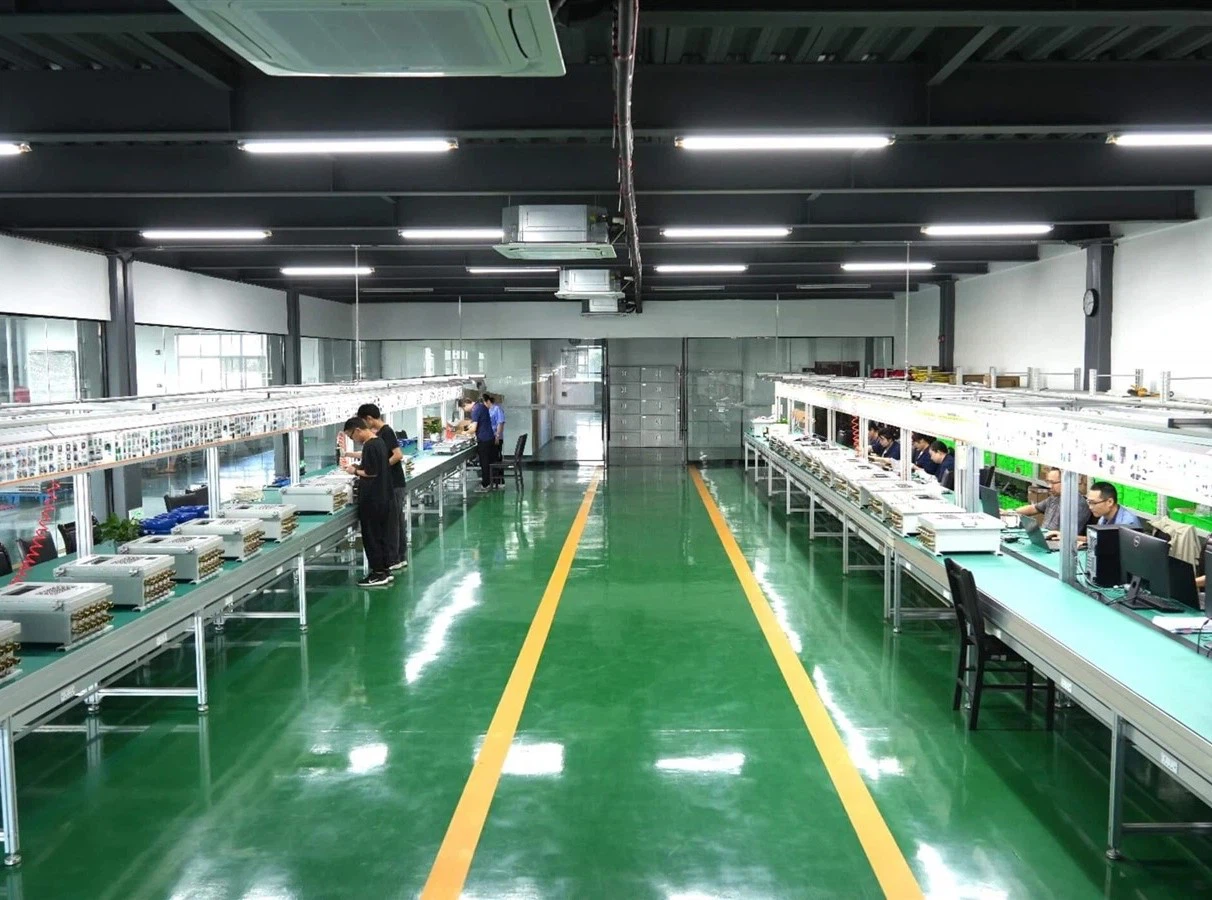
Additionally, Liftora Arm manages an extensive spare parts inventory, ensuring fast delivery of replacement seals, swivels, and valves. This minimizes operational downtime for our international customers.
Operating marine energy transfer systems requires compliance with international safety protocols. Liftora Arm ensures every system complies with global standards.
| Standard / Regulation | Technical Scope | Liftora Arm Compliance Implementation |
|---|---|---|
| OCIMF Guidelines | Design and construction of marine loading arms | Validated structural envelopes, dynamic load fatigue modeling, and standard flange configurations. |
| EN 1474-1 / 2 / 3 | Design, testing, and validation of cryogenic transfer systems | Cryogenic pressure testing of swivel joints and certified dry-break coupler verification. |
| SIGTTO Guidelines | Liquefied gas safety recommendations | Double shut-off valves, integrated BOG recovery loops, and emergency release sequence controls. |
| ASME B31.3 & Sec. IX | Process piping design and welding qualification | Certified welders, full radiographic analysis of load-bearing pipe joints, and post-weld heat treatment. |
We provide field support to ensure operational readiness. Our services include:
Technical and engineering answers regarding Marine LNG Transfer Systems design and operation.
We utilize premium grade 316L and 316LN stainless steel for all parts in contact with cryogenic LNG. These alloys retain high impact toughness and yield strength at temperatures down to -196°C. Structural support beams utilize marine-grade carbon steel with multi-layer corrosion-protective coatings to resist marine environments.
The ERS uses dual isolation ball or butterfly valves positioned on either side of an Emergency Release Coupling (ERC). When the system detects ship drift beyond the safe operating envelope, the hydraulic actuator triggers: first, both valves close in less than 2 seconds to isolate the fluid column; second, the mechanical clamp releases, allowing the arm to separate from the ship's manifold.
Yes. We design dynamic loading systems specifically configured to compensate for multi-axial motion (heave, pitch, roll, yaw, surge, and sway). These feature active constant-tension hydraulic control and tracking sensors to support offshore operations.
We design our swivel joints with localized nitrogen purge systems. The continuous injection of dry nitrogen into the seal chambers displaces moist atmospheric air, preventing ice crystal formation that could lock the rotating ball races.
With regular maintenance and seal replacement schedules, Liftora Marine Loading Arms are engineered for a service life of 25 to 30 years. Structural integrity is verified using finite element analysis (FEA) fatigue modeling over 100,000 load cycles.
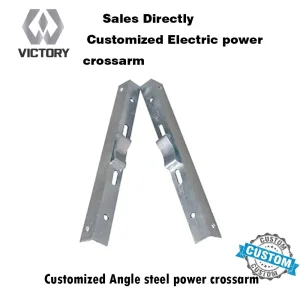
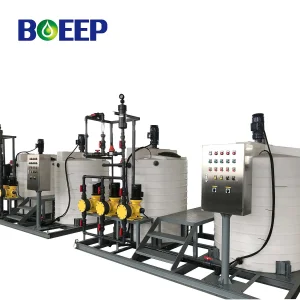
Discover additional structural, chemical dosing, and heavy-load lifting components engineered by Liftora.
 Liftora Arm